
EDEMA

Edema occurs when fluid builds up in your tissues, often in your feet, legs and ankles. Edema can affect anyone, especially people who are pregnant and adults age 65 and older. Treatment involves lifestyle changes, including diet and exercise.

What is edema?

Edema is the medical term for swelling caused by fluid trapped in your body’s tissues. Edema happens most often in your feet, ankles and legs, but can affect other parts of your body, such as your face, hands and abdomen.

Who does edema affect?

Edema can affect anyone, but the condition most often affects people who are pregnant and adults who are 65 years or older.

How common is edema?

Edema is common because there are many causes associated with the condition. Mild cases of edema go away on their own, so the exact rate of occurrence is unknown.

How does edema affect my body?

Edema will cause parts of your body to increase in size (swell), which might prevent you from completing your daily tasks. Simple lifestyle changes like elevating the swollen part of your body or moving around if you were sitting or standing for a long period of time can reduce swelling and help you feel better. Sometimes edema is a symptom of an underlying health condition, so contact your healthcare provider if you experience symptoms of edema.

What are the symptoms of edema?

A symptom of edema is swelling in your body. Swelling occurs when a part of your body gets bigger because there is a buildup of fluid in your tissues. Swelling can happen anywhere on your body but most often affects your feet, ankles and legs.

Symptoms of swelling include:

  • An area of your body is larger than it was a day ago.
  • The skin over the swollen area looks stretched and shiny.
  • Difficulty walking if your legs, ankles or feet swell.
  • You may be coughing or have trouble breathing.
  • You feel full or tightness in your swollen body part.
  • Mild pain or a sore feeling in the affected area.

What causes edema?

After your healthcare provider makes an edema diagnosis, their next step is to identify what caused fluid to build up in your tissues. There are several possible causes for an edema diagnosis including:

  • Gravity: If you spend a lot of time sitting or standing in one place for too long, water naturally pulls down into your arms, legs and feet (dependent edema).
  • Weakened valves of your veins (venous insufficiency): When the valves in your veins are weak, it is hard for your veins to push blood back up to your heart, and leads to varicose veins and a buildup of fluid in the legs.
  • Underlying medical conditions: Conditions like heart failure and lung, liver, kidney and thyroid diseases have edema as a symptom.
  • Side effects from medication: Some drugs, like blood pressure or pain management medications, have edema as a side effect.
  • Poor nutrition: If you aren’t eating a well-balanced diet or if you eat a lot of foods high in salt (sodium), fluid could build up in different parts of your body.
  • Pregnancy: Swelling in your legs during pregnancy occurs as the uterus puts pressure on your blood vessels in the lower trunk of your body.
  • Compromised immune system: An allergic reaction, infection, burns, trauma or clots can lead to edema.

How is edema diagnosed?

Your healthcare provider will give a physical examination to diagnose edema, followed by diagnostic tests to find the cause. They will look for swelling, especially on parts of your body where your skin has a shiny or stretched appearance.

What is edema grading?

Edema grading is a scale used to identify the severity of your edema diagnosis and estimate how much fluid built up in your tissues.

Your healthcare provider will test an area of your body for edema by gently pressing their finger on a swollen area of your skin for five to 15 seconds (pitting test). After they release pressure, a dimple (pit) will appear in your skin. The pit indicates that there is fluid built up in your tissues.

The edema grading scale measures how quickly the dimple goes back to normal (rebound) after a pitting test. The scale includes:

  • Grade 1: Immediate rebound with 2 millimeter (mm) pit.
  • Grade 2: Less than 15-second rebound with 3 to 4 mm pit.
  • Grade 3: Rebound greater than 15 seconds but less than 60 seconds with 5 to 6 mm pit.
  • Grade 4: Rebound between 2 to 3 minutes with an 8 mm pit.

How is edema treated?

Treatment for edema varies based on the cause, especially if the cause relates to an underlying health condition. For example:

  • If lung disease causes edema, such as emphysema or chronic bronchitis, your healthcare provider will recommend quitting smoking if you smoke.
  • If edema occurs with chronic heart failure, your provider will recommend lifestyle changes to treat your diagnosis by monitoring your weight, fluid intake and salt intake. Your provider might recommend cutting back on the amount of alcohol you drink.
  • If edema is a side effect of a medication you are taking, your provider might stop or lower the dosage of your medication to resolve the swelling. Do not stop taking your medication unless your provider tells you to do so.

Treatment to reduce swelling

In addition to treating the underlying cause of edema, there are a few steps you can take to keep fluid from building up in your body:

  • When you are sitting or lying down, put a pillow under your legs to keep them elevated above the level of your heart.
  • Do not sit or stand for long periods without moving or go on short walks.
  • Wear support socks, stockings or sleeves, which put pressure on parts of your body to keep fluids from collecting there. Edema shoes are available for people who experience chronic edema and need adjustable footwear for swelling.
  • Reduce the amount of salt in your diet.
  • Follow your doctor’s directions for taking medications. Your doctor might want you to take a diuretic (commonly called a “water pill”), which helps your body get rid of excess fluid.

What can’t I eat with edema?

In some cases, the cause of edema could be too much salt in your diet. Salt causes your body to retain water, which could leak into your tissues and cause swelling. Making lifestyle changes to reduce the amount of salt in your diet could improve your edema diagnosis.

How soon after treatment will I feel better?

Depending on the cause of your diagnosis, edema could be temporary or permanent. Swelling normally lasts for a few days. In the first two days, you will experience the most swelling, and it should start to reduce by the third day. Following treatment from your healthcare provider reduces the amount of swelling you might experience. If your swelling doesn’t go away after a few days of treatment, talk to your healthcare provider.

How can I prevent edema?

Sometimes, you can’t prevent what caused edema if it is the result of an underlying health condition like heart failure, liver or kidney disease, but you can work with your healthcare provider to manage symptoms.

If the cause of edema is too much salt intake, adjusting your diet to reduce the amount of salt in the foods you eat will prevent edema.

You can also prevent edema by moving around more frequently. Sitting or standing without moving could cause fluid to build up in your tissues. If you notice you’ve been sitting for a long period of time and you’re able to, get up or move your body around; it will reduce the likelihood of swelling.

What can I expect if I have edema?

It’s very important to see your healthcare provider if you experience edema or swelling in your body. Edema can stretch your skin and if not treated, swelling could increase and cause serious health problems.

Edema can be a short-term or long-term condition, depending on its cause. Treatment is available to help you manage any underlying conditions that might cause edema or you can make simple lifestyle changes to reduce swelling and fluid buildup in your body.

How do I take care of myself?

If you have edema, take steps to reduce swelling by:

  • Making lifestyle changes to stop smoking or changing your diet.
  • Moving around more often.
  • Elevating your legs when lying down or sitting.
  • Wearing compression socks, sleeves or stockings.

It is important to protect any swollen areas of your body from additional pressure, injury and extreme temperatures. Injury to the skin over swollen areas takes longer to heal and is more likely to become infected.

When should I see my healthcare provider?

Call your healthcare provider immediately if you experience:

  • Pain or discolored skin in a swollen area.
  • An open sore on a swollen area.
  • Shortness of breath.
  • Swelling of only one limb.
  • Difficulty walking or you have trouble moving.

What questions should I ask my doctor?

  • What caused my edema?
  • Do I need to reduce the amount of salt in my diet?
  • Are there side effects to the treatment?
  • Do I need to wear compression socks to reduce swelling in my ankles?

A note from QBan Health Care Services

Edema is common and ranges in severity for each person diagnosed with the condition based on the cause. If you are pregnant, it is normal to experience swelling as your due date nears. Normally, edema will go away on its own if you have a mild case, and medication and treatment are available if you have a more severe case.

If are not pregnant and you notice that you have unexpected swelling in a part of your body, contact your healthcare provider for an exam. Edema could be a sign of an underlying health condition and early diagnosis and treatment could lead to the best prognosis.

GOUT

Gout is a painful form of arthritis. When your body has extra uric acid, sharp crystals can form in your joints (usually your big toe). Flare-ups of symptoms like pain and swelling come and go in periods called gout attacks. Treatment is usually a combination of symptom management and changing your diet.

What is gout?

Gout is a form of inflammatory arthritis that causes pain and swelling in your joints. Gout happens when there’s a buildup of uric acid in your body.

Gout most commonly affects your big toe joint. But it can affect other joints, including your:

Gout symptoms come and go (recur) in episodes called flares or gout attacks. A healthcare provider will suggest medications and changes to your diet that will lower your uric acid levels and minimize how often you experience gout attacks in the future.

What are gout symptoms?

Gout attacks are very painful and can happen suddenly, often overnight. During a gout attack, symptoms in your affected joints may include:

  • Intense pain.
  • Discoloration or redness.
  • Stiffness.
  • Swelling.
  • Tenderness, even to a light touch (like a bedsheet covering your affected joint).
  • Warmth, or a feeling like the joint is “on fire.”

How long does a gout attack last?

Gout attacks usually last a week or two. You might have some flares that last longer than others, and some might cause more severe symptoms. Between attacks, you might not experience any gout symptoms.

What causes gout?

A buildup of excess uric acid in your body causes gout. Your body naturally makes uric acid when it breaks down chemicals called purines found in certain foods and drinks. Your kidneys usually filter uric acid out of your blood, and then it leaves your body when you pee. Sometimes your body makes too much uric acid, or your kidneys don’t remove it from your blood fast enough. When your body has high levels of uric acid (hyperuricemia), uric acid crystals can build up and settle into your joints. The sharp crystals clump together and cause sudden episodes of pain, swelling and other symptoms. Having temporarily high uric acid levels doesn’t mean you’ll definitely develop gout. Many people with hyperuricemia never get gout.

Gout risk factors

Gout can affect anyone. People assigned male at birth (AMAB) are three times more likely to develop gout. People assigned female at birth (AFAB) usually don’t experience gout until after menopause. People with certain health conditions are more likely to develop gout, including:

You’re more likely to experience gout if you:

  • Have a biological parent or grandparent who has gout.
  • Eat a lot of animal proteins — especially animal flesh, shellfish and foods that contain organ meat.
  • Drink alcohol regularly.
  • Take a diuretic medication (water pills).
  • Take immunosuppressants.

Which foods cause gout?

Eating or drinking foods high in purines are more likely to lead to high uric acid levels in your body that cause gout, including:

  • Sugary drinks and sweets: Standard table sugar is half fructose (fruit sugar), which breaks down into uric acid. Any food or drink with high sugar content can trigger gout.
  • High fructose corn syrup: This is a concentrated form of fructose. Packaged food products and processed snacks can contain lots of high fructose corn syrup.
  • Alcohol: Even though not all alcoholic drinks are high in purines, alcohol prevents your kidneys from eliminating uric acid, pulling it back into your body, where it continues to accumulate.
  • Organ meats: These include liver, tripe, sweetbreads, brains and kidneys.
  • Game meats: Specialties such as goose, veal and venison all contain high levels of purines.
  • Certain seafood: Herring, scallops, mussels, codfish, tuna, trout and haddock.
  • Red meat: Beef, lamb, pork and bacon.
  • Turkey: Especially processed deli turkey.
  • Gravy and meat sauces.

How is gout diagnosed?

A healthcare provider will diagnose gout with a physical exam. They’ll ask you about your symptoms and examine your affected joints. Tell your provider when you first noticed symptoms like pain and swelling in your joint and how often the symptoms come and go.

What tests will be done to diagnose gout?

Your healthcare provider might use a few imaging tests to take pictures of your affected joints. These tests can also show if gout has caused any changes in your joints. You might need:

Other common tests to diagnose gout include:

  • Blood tests to measure the uric acid in your blood.
  • Joint aspiration — using a needle to remove a sample of fluid from inside a joint.

How is gout treated?

Treating gout is usually a combination of managing your symptoms during a flare and reducing how often you consume high-purine foods and drinks.

Gout medication

Your healthcare provider might suggest medications to help manage your symptoms, including:

  • NSAIDs: Over-the-counter (OTC) NSAIDs, like ibuprofen and naproxen, can reduce pain and swelling during a gout attack. Some people with kidney disease, stomach ulcers and other health problems shouldn’t take NSAIDs. Talk to your provider before taking NSAIDs.
  • Colchicine: Colchicine is a prescription medication that can reduce inflammation and pain if you take it within 24 hours of a gout attack.
  • Corticosteroids: Corticosteroids are prescription medications that reduce inflammation. Your provider might prescribe oral (by mouth) pills. They may also inject corticosteroids into your affected joints or into a muscle near your joint (intramuscularly).

Your provider might prescribe medications to help lower your uric acid levels. The most common medications that lower uric acid include:

  • Allopurinol.
  • Febuxostat.
  • Pegloticase.
  • Probenecid.

Low purine diet for gout

Your healthcare provider may suggest you follow a low-purine diet. A low-purine diet encourages you to consume fewer foods and drinks with high purine content. This will help reduce uric acid in your body. It also encourages you to eat some select foods that may reduce your uric acid levels.

Can gout be cured?

There’s no cure for gout. You’ll experience fewer attacks once you work with a healthcare provider to find treatments that manage your symptoms and lower your uric acid levels.

Can I prevent gout?

The best way to prevent gout is to limit how often you consume high-purine foods and drinks. Make sure you drink plenty of water to help your kidneys function better and avoid dehydration.

Getting regular exercise can help reduce stress on your joints and reduce your risk for obesity and other health conditions that make you more likely to develop gout.

What can I expect if I have gout?

If you have gout, you should expect to have flares of symptoms that come and go. Flares can happen more frequently if you don’t get gout diagnosed and treated by a healthcare provider.

Some people with gout experience more severe or more frequent attacks right after starting treatment as the uric acid in their body adjusts to new medications or changes in their diet.

What’s the outlook for people with gout?

Most people with gout eventually find a combination of treatments and lifestyle tweaks to manage their symptoms and reduce how often they experience gout attacks. Gout is treatable, People who have a blood uric level lower than 6 mg/dL are much less likely to experience gout attacks.

Untreated gout can lead to permanent joint damage. The buildup of uric acid in your joints and soft tissue is called tophus. Some people with gout can also develop other health problems, including:

  • Severe arthritis and changes to the shape of your joint (joint deformity).
  • Tophi (the plural form of tophus — a buildup of uric acid in the joints and soft tissue).
  • Kidney stones.
  • Heart disease.

How can I manage a gout attack?

When you have a gout attack, you can manage your symptoms by:

  • Avoiding alcohol and sweet drinks.
  • Drinking plenty of water.
  • Elevating your affected joints above the level of your heart as often as you can.
  • Icing your joints. Wrap an ice pack in a thin towel or put a cold compress on your joint for 15-20 minutes at a time a few times a day.
  • Limiting stress on your joint by avoiding intense exercise or physical activities.

When should I see my healthcare provider?

Visit a healthcare provider if you experience sudden intense pain in any of your joints, especially if your joint is also swollen and your skin is red or discolored. Gout shares many symptoms with infections that need to be treated right away.

Talk to your provider if you’re having more frequent gout attacks or if your symptoms are more severe than they used to be.

What questions should I ask my doctor?

  • Do I have gout or another type of arthritis?
  • What can I do to prevent future gout attacks?
  • Which foods and drinks should I avoid?
  • Will I need medication to treat gout?

What are the first signs of having gout?

A gout attack usually happens suddenly and without much warning. You’ll probably notice a sudden, intense pain in your affected joints. Gout attacks often develop overnight, so you might notice symptoms when you wake up in the morning. It’s common to go from having no symptoms to experiencing severe symptoms all at once during a gout attack.

If you haven’t been diagnosed with gout or gout symptoms before, visit a provider as soon as possible to make sure you don’t have an infection or another condition that’s causing your joint pain and swelling.

If you’ve been diagnosed with gout and you notice a flare starting, take the medication that your healthcare provider prescribed to help you manage your symptoms right away.

A note from QBan Health Care Services

Gout is a painful form of arthritis. Extra uric acid in your body creates sharp crystals that collect in your joints, causing pain, swelling and other symptoms. Talk to your healthcare provider about medication and changes in your diet that can help you manage your symptoms and reduce how often you experience attacks in the future.

ECHOCARDIOGRAM

An echocardiogram is an ultrasound test that checks the structure and function of your heart. An echo can diagnose a range of conditions including cardiomyopathy and valve disease. There are several types of echo tests, including transthoracic and transesophageal. Talk with your provider about the type that’s best for you.

What is an echocardiogram?

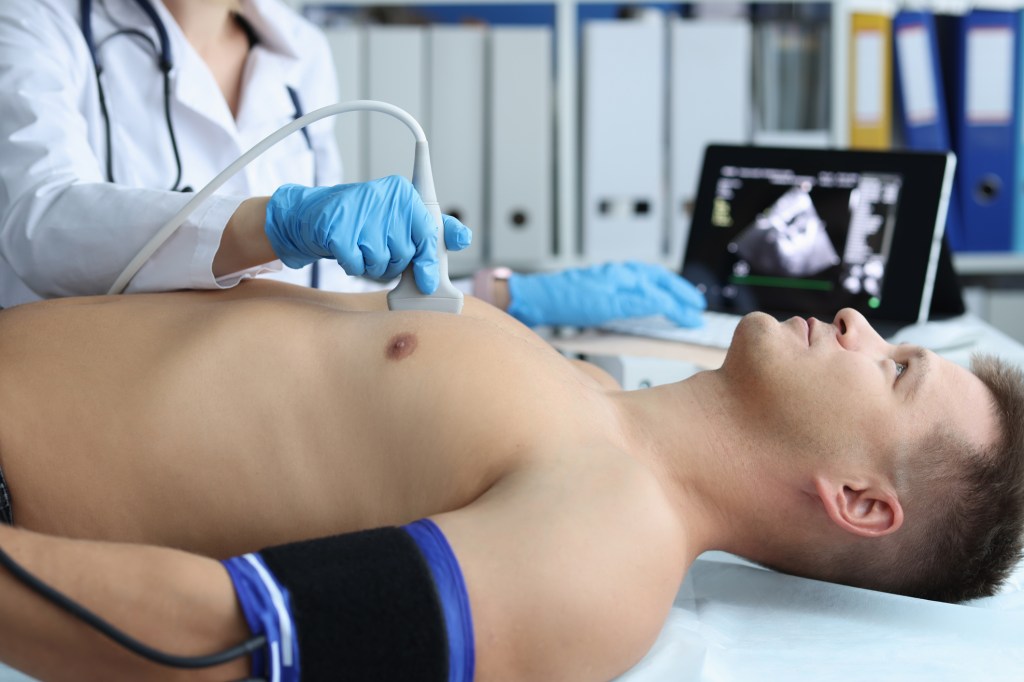
An echocardiogram (echo) is a graphic outline of your heart’s movement. During an echo test, your healthcare provider uses ultrasound (high-frequency sound waves) from a hand-held wand placed on your chest to take pictures of your heart’s valves and chambers. This helps the provider evaluate the pumping action of your heart.

Providers often combine echo with Doppler ultrasound and color Doppler techniques to evaluate blood flow across your heart’s valves.

Echocardiography uses no radiation. This makes an echo different from other tests like X-rays and CT scans that use small amounts of radiation.

Who performs an echo test?

A technician called a cardiac sonographer performs your echo. They’re trained in performing echo tests and using the most current technology. They’re prepared to work in a variety of settings including hospital rooms and catheterization labs.

What are the different types of echocardiogram?

There are several types of echocardiogram. Each one offers unique benefits in diagnosing and managing heart disease. They include:

What techniques are used in echocardiography?

Several techniques can be used to create pictures of your heart. The best technique depends on your specific condition and what your provider needs to see. These techniques include:

  • Two-dimensional (2D) ultrasound. This approach is used most often. It produces 2D images that appear as “slices” on the computer screen. Traditionally, these slices could be “stacked” to build a 3D structure.
  • Three-dimensional (3D) ultrasound. Advances in technology have made 3D imaging more efficient and useful. New 3D techniques show different aspects of your heart, including how well it pumps blood, with greater accuracy. Using 3D also allows your sonographer to see parts of your heart from different angles.
  • Doppler ultrasound. This technique shows how fast your blood flows, and also in what direction.
  • Color Doppler ultrasound. This technique also shows your blood flow, but it uses different colors to highlight the different directions of flow.
  • Strain imaging. This approach shows changes in how your heart muscle moves. It can catch early signs of some heart disease.
  • Contrast imaging. Your provider injects a substance called a contrast agent into one of your veins. The substance is visible in the images and can help show details of your heart. Some people experience an allergic reaction to the contrast agent, but reactions are usually mild.

How long does an echocardiogram take?

An echocardiogram usually takes 40 to 60 minutes. A transesophageal echo may take up to 90 minutes.

What is an echocardiogram vs. an EKG?

An echocardiogram and an electrocardiogram (called an EKG or ECG) both check your heart. But they check for different things and produce different types of visuals.

An echo checks the overall structure and function of your heart. It produces moving pictures of your heart.

An EKG checks your heart’s electrical activity. It produces a graph, rather than pictures of your heart. The lines on this graph show your heart rate and rhythm.

When would I need an echocardiogram?

Your provider will order an echo for many reasons. You may need an echocardiogram if:

  • You have symptoms, and your healthcare provider wants to learn more (either by diagnosing a problem or ruling out possible causes).
  • Your provider thinks you have some form of heart disease. The echo is used to diagnose the specific problem and learn more about it.
  • Your provider wants to check on a condition you’ve already been diagnosed with. For example, some people with valve disease need echo tests on a regular basis.
  • You’re preparing for a surgery or procedure.
  • Your provider wants to check the outcome of a surgery or procedure.

What does an echocardiogram show?

An echocardiogram can detect many different types of heart disease. These include:

  • Congenital heart disease, which you’re born with.
  • Cardiomyopathy, which affects your heart muscle.
  • Infective endocarditis, which is an infection in your heart’s chambers or valves.
  • Pericardial disease, which affects the two-layered sac that covers the outer surface of your heart.
  • Valve disease, which affects the “doors” that connect the chambers of your heart.

An echo can also show changes in your heart that could indicate:

How is a transthoracic echocardiogram done?

A transthoracic echo is the type most people think of when they hear “heart echo.” It’s also the type most often used. It’s performed outside your body.

A sonographer places a hand-held wand (called a transducer) on the outside of your chest to send sound waves to your heart. These sound waves bounce off the different parts of your heart.

These “echoes” then appear as pictures on the sonographer’s computer screen. These pictures can also be saved for your cardiologist and physician to review later.

Preparing for a transthoracic echo

There’s not much you need to do to prepare for this type of echo. In general:

  • You don’t need to avoid eating or drinking before a transthoracic echo.
  • Take your medications as you usually do.
  • Wear anything you’d like.
  • Leave anything valuable at home. You’ll be given a storage locker to use during the test.

What to expect during a transthoracic echo

A transthoracic echo includes the following steps:

  1. You’ll be asked to remove your clothing from the waist up. You’ll put on a hospital gown.
  2. Your sonographer will place several electrodes on your chest. These are small, flat, sticky patches. The electrodes are attached to an electrocardiograph (EKG) monitor. The EKG records your heart’s electrical activity during the test.
  3. You’ll lie down on an exam table. Your sonographer will ask you to lie on your left side if possible.
  4. Your sonographer will place a sound-wave transducer (wand) on several areas of your chest. There’s a small amount of gel on the end of the wand, which won’t harm your skin. This gel helps produce clearer pictures.
  5. You may hear swishing sounds throughout the test. This is normal. It means you’re hearing blood flowing through your heart as the wand picks up the sound.
  6. Throughout the test, your sonographer may ask you to hold your breath for several seconds at a time. You may also need to move into a different position.

You should feel no major discomfort during the test. You may feel a coolness on your skin from the gel on the wand. You may also feel a slight pressure of the wand against your chest.

How is a transesophageal echocardiogram done?

A transesophageal echo takes pictures from inside your chest, rather than from the outside. It can show your heart and valves in greater detail than a transthoracic echo. That’s because your body’s bones and tissues aren’t in between the transducer and your heart.

For this test, the sonographer guides a small transducer down your throat and esophagus (food tube) using a long, flexible tube. This minimally invasive procedure may cause mild, temporary discomfort. But it has a low risk of serious problems.

This type of echo may be used:

  • When your provider needs a detailed look at your aorta or the back of your heart (especially your left atrium or left ventricle).
  • To check for blood clots.
  • To evaluate your mitral valve or aortic valve.
  • If you have obesity or lung disorders.
  • If a transthoracic echo isn’t possible for various other reasons.

Preparing for a transesophageal echo

As you prepare for your echo, tell your doctor if you have:

  • Problems with your esophagus, like a hiatal hernia.
  • Problems swallowing.
  • Sleep apnea.
  • IV drug use.

It’s also important to share if you take medication for:

  • Sleep issues.
  • Anxiety.
  • Pain.

Preparations for the day of your test include:

  • Find someone to drive you home from your test. This is because you’ll be sedated for the test, and you won’t be able to drive for 24 hours.
  • Don’t eat or drink anything for at least six hours before your test. Your provider may give you more specific instructions for eating and drinking. It’s essential you follow these closely.
  • Ask your provider about when to take your usual medications. You may be able to take them at your usual time with a small sip of water.
  • Ask your provider about when and how to take your diabetes medication, if this is relevant to you.
  • Plan to leave any valuable personal items at home. You’ll have access to a storage locker for your belongings during the test.
  • Plan to wear whatever’s most comfortable for you. You’ll change into a hospital gown before the echo begins.

What to expect during a transesophageal echo

A transesophageal echo includes the following steps:

  1. You’ll remove your clothing from the waist up and put on a hospital gown.
  2. Your provider will place electrodes (small stickers) on your chest. The electrodes allow your sonographer to monitor your heart’s electrical activity during the test.
  3. Your provider will place a blood pressure cuff on your arm and a pulse oximeter on your finger.
  4. You’ll gargle with a solution that numbs your throat. Your provider will also spray your throat with pain-relieving medication.
  5. To make you more comfortable, you’ll be hooked up to an IV and sedated. You’ll soon start to feel sleepy.
  6. You may have a tube in your nose that provides oxygen.
  7. You’ll lie on your left side on the exam table.
  8. The provider will insert an endoscope into your mouth. This is a long, thin, flexible tube that has a transducer on the tip. The tube travels into your throat and esophagus. It’s lubricated to help it slide down more easily. While this may feel uncomfortable, it won’t harm you. You may need to swallow to move the transducer into the right spot (just behind your heart).
  9. Your provider will take pictures. You won’t feel anything while this happens.
  10. After your provider has the pictures they need, they’ll remove the tube from your throat. You’ll soon be able to get dressed and get ready to leave.

How is an exercise stress echocardiogram done?

An exercise stress echo, sometimes simply called a stress echo, shows how your heart works when it’s taxed. The test resembles a traditional exercise stress test. A technician will monitor your heart rate and rhythm as well as your blood pressure (this is standard during a stress test). But they’ll also use echo imaging (which isn’t normally used during a stress test).

This test shows how well your heart can withstand activity. Your sonographer takes pictures before you start exercising and then right after you’re done.

In some cases, you won’t exercise. Instead, your provider will give you medication to make your heart work harder as if you were exercising. The goal is to force your heart to need more oxygen.

When your heart is under stress, your sonographer can see details they might not be able to see if you were lying on the exam table. These include problems with your coronary arteries or the lining of your heart.

Preparing for an exercise stress echo

Your provider will give you detailed instructions on how to prepare for your test. An exercise stress echo needs more preparation than other types of echo testing. These include:

  • Not eating or drinking anything except water for at least four hours before your test.
  • Not smoking on the day of your test.
  • Avoiding caffeine for 24 hours before your test. This includes caffeine in any form (coffee, tea, decaf drinks and some over-the-counter pain medicines).

Ask your provider when and how to take your usual medications. You may need to avoid taking certain heart medications on the day of your test. You may also need to change your dose of diabetes medication. Closely follow your provider’s guidance.

You won’t be sedated, but you still may want to ask someone to drive you to and from the appointment. You may feel tired after the test.

Plan to wear comfortable clothes and shoes. You’ll need to walk or ride a stationary bike during the test, so wear what feels good for you.

What to expect during an exercise stress echo

The exercise stress echo will include the following steps:

  1. Your sonographer will place electrodes (small stickers) on your chest. These stickers are hooked up to an EKG monitor to check your heart rate and rhythm during the test.
  2. Your provider will measure your heart rate, heart rhythm and blood pressure before you start moving.
  3. You’ll lie on an exam table so your sonographer can take pictures of your heart. They’ll place a hand-held wand (the kind usually used for echo tests) on the outside of your chest in various spots.
  4. Then, it’s time to start moving. You’ll walk on a treadmill or pedal on a stationary bike. The intensity will gradually increase. You’ll keep going until you’re exhausted. This usually takes seven to 12 minutes.
  5. As you’re exercising, a technician will ask how you’re feeling. Tell them any and all symptoms you notice. They’ll also watch your heart on the EKG monitor.
  6. You’ll stop moving, and you’ll have another echo test done.
  7. You’ll then do a short cool-down (slow walking or cycling), and your provider will monitor your vitals until they’re back to normal.

If you were given medication to stress your heart, the process will be a bit different. You won’t be on a treadmill or bike. Talk to your provider to learn what to expect and how you might feel during this type of test.

How do I get the results of my test?

After your cardiologist reviews your test, they’ll enter the results into your electronic medical record. Your primary care provider will have access to the results, too. You’ll discuss the results with one or both of these providers.

Ask any questions you’d like about the pictures and what they mean. Your provider will explain what the pictures show and whether you need follow-up tests or treatment.

What should you not do before an echocardiogram?

It depends on which type of echo you’re having done. Check with your provider to learn exactly what you should avoid. Things you may need to avoid before your echo include:

  • Eating or drinking.
  • Smoking or using any nicotine products.
  • Drinking coffee or anything with caffeine in it. This includes decaf drinks, which still contain a small amount of caffeine. It also includes over-the-counter medications that contain caffeine.

You may need to adjust your medication schedule before your echo. Don’t stop taking any medications or make any changes until you talk with your provider.

A note from QBan Health Care Services

An echocardiogram is an important test that can reveal a lot about your heart’s structure and function. If your provider recommends an echo for you, ask about what type you’ll be receiving and what you can expect. You may need more than one echo, or multiple tests with different techniques, so your provider can get enough details about your heart.

Ask your provider to explain the pictures to you and help you understand what they mean. Taking an active role in your diagnosis and care can help you feel comfortable with each step of the process.

SARCOPENIA

Sarcopenia is the age-related progressive loss of muscle mass and strength. The main symptom of the condition is muscle weakness. Sarcopenia is a type of muscle atrophy primarily caused by the natural aging process. Scientists believe being physically inactive and eating an unhealthy diet can contribute to the disease.

What is sarcopenia?

The medical definition of sarcopenia is the gradual loss of muscle mass, strength and function. The condition commonly affects the elderly population and is thought to occur due to aging. Sarcopenia can greatly impact your quality of life by reducing your ability to perform daily tasks. It can lead to the loss of your independence and the need for long-term care.

Sarcopenia affects your musculoskeletal system and is a major factor in increased frailty, falls and fractures. These conditions can lead to hospitalizations and surgeries, which increase the risk of complications including death.

Sarcopenia can also affect people with a high body mass index (BMI), in a condition called sarcopenic obesity. People with obesity and sarcopenia have a greater risk for complications than with obesity or sarcopenia alone.

Who does sarcopenia affect?

Sarcopenia most commonly affects people ages 60 and older. The rates increase with age. The disease affects both sexes equally. Studies on affected ethnicities are inconsistent. The rates of the condition increase in people with chronic disease.

How common is sarcopenia?

Studies are inconsistent, and many people don’t receive a diagnosis or treatment for sarcopenia. But rates of the condition range from 5% to 13% in people ages 60 and older. The estimates increase to 11% to 50% in people ages 80 and older.

How does sarcopenia affect my body?

A decrease in both the number and size of your muscle fibers causes your muscles to thin (muscle atrophy).

As you age, your body goes through certain changes that play a major factor in developing sarcopenia. For instance, your body doesn’t produce the same amount of proteins your muscles need to grow. When this happens, your muscle cells get smaller.

In addition, as you grow older, changes in certain hormones — like testosterone and insulin-like growth factor (IGF-1) — affect your muscle fibers. This can lead to sarcopenia.

What are the symptoms of sarcopenia?

The most common symptom of sarcopenia is muscle weakness. Other symptoms may include:

  • Loss of stamina.
  • Difficulty performing daily activities.
  • Walking slowly.
  • Trouble climbing stairs.
  • Poor balance and falls.
  • Decrease in muscle size.

What causes sarcopenia?

The most common cause of sarcopenia is the natural aging process. You gradually begin losing muscle mass and strength sometime in your 30s or 40s. This process picks up between the ages of 65 and 80. Rates vary, but you may lose as much as 8% of your muscle mass each decade. Everyone loses muscle mass over time, but people with sarcopenia lose it more quickly.

Although aging tends to be the dominant factor, researchers have discovered other possible risk factors for sarcopenia. These may include:

  • Physical inactivity.
  • Obesity.
  • Chronic diseases such as chronic obstructive pulmonary disease (COPD), kidney disease, diabetes, cancer and HIV.
  • Rheumatoid arthritis.
  • Insulin resistance.
  • Reduction in hormone levels.
  • Malnutrition or inadequate protein intake.
  • Decrease in your ability to convert protein to energy.
  • Decline in the number of nerve cells that send messages from your brain to your muscles telling them to move.

How is sarcopenia diagnosed?

Your healthcare provider may diagnose sarcopenia after performing a physical exam and asking you about your symptoms. You may complete a questionnaire based on your self-reported symptoms called the SARC-F. SARC-F stands for:

  • S — Strength.
  • A — Assistance with walking.
  • R — Rising from a chair.
  • C — Climbing stairs.
  • F — Falls.

You score each factor with a number between 0 and 2. The highest maximum SARC-F score is 10. A SARC-F score of 4 or more warrants more testing.

What tests will be done to diagnose sarcopenia?

There is no single test that can diagnose sarcopenia. Your healthcare provider may recommend several tests to diagnose and then determine the severity of sarcopenia.

Muscle strength tests

  • Handgrip test: Handgrip strength draws a parallel to the strength in your other muscles. Providers use it to identify shortages in overall muscle strength.
  • Chair stand test: Providers use the chair stand test to measure your leg muscle strength, especially your quadriceps. The chair stand test measures the number of times you can stand and sit from a chair without the use of your arms in 30 seconds.
  • Walking speed test: The walking (gait) speed test measures the time it takes for you to travel 4 meters (about 13 feet) at your usual walking pace.
  • Short physical performance battery (SPPB): With the SPPB test, you take three timed tasks: chair stand test, standing balance test and walking speed test.
  • Timed-up and go test (TUG): The TUG test measures the time it takes for you to rise from a chair, walk 3 meters (about 10 feet) away from the chair, walk 3 meters back to the chair, and sit back down in the chair.

Imaging tests for measurement of muscle mass

  • Dual-energy X-ray absorptiometry (DEXA or DXA): This type of imaging test uses low-energy X-rays to measure your muscle mass, fat mass and bone density.
  • Bioelectrical impedance analysis (BIA): The BIA test is less expensive and more widely available than DEXA. It measures your body fat in relation to your lean body mass.

How is sarcopenia treated?

Treatment for sarcopenia typically includes lifestyle changes. These modifications to your lifestyle behaviors can treat and help reverse sarcopenia.

  • Physical activity: Your healthcare provider may recommend progressive resistance-based strength training. This type of exercise can help improve your strength and reverse your muscle loss.
  • Healthy diet: When paired with regular exercise, eating a healthy diet can also help reverse the effects of sarcopenia. It’s especially important to increase your protein intake through food or supplements.

What medications are used to treat sarcopenia?

Researchers are studying the possibility of using hormone supplements to increase muscle mass. But there aren’t currently any FDA-approved medications to treat sarcopenia.

How can I prevent sarcopenia?

You may not be able to completely prevent sarcopenia since the condition happens as part of the natural aging process. But you can take steps to slow the progression of the disease. These include:

  • Make healthy food choices: Maintain a healthy diet that includes high-quality proteins. Aim for 20 to 35 grams of protein in each meal.
  • Exercise: Maintain a physically active lifestyle that includes exercises such as resistance training.
  • Routine physicals: See your healthcare provider regularly, and let them know about any changes in your health.

What can I expect if I have sarcopenia?

The outlook for sarcopenia primarily depends on your age. Rates of the condition increase as you grow older. In addition, the outlook for the condition varies based on your health and lifestyle.

The disease can greatly affect your quality of life. You may be able to reverse the effects of the condition with lifestyle changes. If you don’t make recommended changes, the disease will continue to weaken your muscles. Over time, you may need full-time care to live your life.

Is sarcopenia a disease?

In 2016, the Centers for Disease Control and Prevention (CDC) declared sarcopenia a specific disease by creating an International Classification of Disease (ICD) 10 code for the condition. This designation made sarcopenia a reportable disease by healthcare providers. Therefore, it increased the diagnosis and treatment of the disease. This label helps distinguish sarcopenia from similar diseases and allows researchers to begin collecting valuable data about the condition.

What’s the difference between sarcopenia and muscle atrophy?

Sarcopenia is a type of muscle atrophy that specifically affects people as they grow older. Muscle atrophy is the loss of muscle tissue. The two conditions share common features of muscle loss, but the processes behind them are different. A decrease in the size and number of your muscle fibers causes sarcopenia. With muscle atrophy, there’s a reduction in the size of the fibers, but the amount of fibers stays the same.

A note from QBan Health Care Services

Everyone experiences some amount of muscle loss as they age. But with sarcopenia, this muscle loss happens faster. The good news is, there are ways to treat and even reverse the effects of the condition. If you’ve experienced muscle weakness, loss of endurance or any other symptoms of sarcopenia, call your healthcare provider. They can diagnose the condition and develop a treatment plan for you to revert the muscle loss and improve your condition.

OSTEOPOROSIS

Osteoporosis silently weakens your bones, which can make you more likely to experience a bone fracture (broken bone). You can prevent bone density loss with treatments and exercise. Ask your provider about a bone density test if you’re over 65 or have a family history of osteoporosis.

What is osteoporosis?

Osteoporosis is a disease that weakens your bones. It makes your bones thinner and less dense than they should be. People with osteoporosis are much more likely to experience broken bones (bone fractures).

Your bones are usually dense and strong enough to support your weight and absorb most kinds of impacts. As you age, your bones naturally lose some of their density and their ability to regrow (remodel) themselves. If you have osteoporosis your bones are much more fragile than they should be, and are much weaker.

Most people don’t know they have osteoporosis until it causes them to break a bone. Osteoporosis can make any of your bones more likely to break, but the most commonly affected bones include your:

The sooner a healthcare provider diagnoses osteoporosis, the less likely you are to experience bone fractures. Ask a healthcare provider about checking your bone density, especially if you’re over 65, have had a bone fracture after age 50, or someone in your biological family has osteoporosis.

How common is osteoporosis?

More than 50 million people in the U.S. live with osteoporosis.

Osteoporosis is common in people over 50. Experts estimate that half of all people assigned female at birth and 1 in 4 people assigned male at birth over 50 have osteoporosis.

Studies have found that 1 in 3 adults over 50 who don’t have osteoporosis yet have some degree of reduced bone density (osteopenia). People with osteopenia have early signs of osteoporosis. If it’s not treated, osteopenia can become osteoporosis.

What are osteoporosis symptoms?

Osteoporosis doesn’t have symptoms the way lots of other health conditions do. That’s why healthcare providers sometimes call it a silent disease.

You won’t feel or notice anything that signals you might have osteoporosis. You won’t have a headache, fever or stomachache that lets you know something in your body is wrong.

The most common “symptom” is suddenly breaking a bone, especially after a small fall or minor accident that usually wouldn’t hurt you.

Even though osteoporosis doesn’t directly cause symptoms, you might notice a few changes in your body that can mean your bones are losing strength or density. These warning signs of osteoporosis can include:

  • Losing an inch or more of your height.
  • Changes in your natural posture (stooping or bending forward more).
  • Shortness of breath (if disks in your spine are compressed enough to reduce your lung capacity).
  • Lower back pain (pain in your lumbar spine).

It might be hard to notice changes in your own physical appearance. A loved one may be more likely to see changes in your body (especially your height or posture). People sometimes joke about older adults “shrinking” as they age, but this can be a sign that you should visit a healthcare provider for a bone density test.

What causes osteoporosis?

Osteoporosis happens as you get older and your bones lose their ability to regrow and reform themselves.

Your bones are living tissue like any other part of your body. It might not seem like it, but they’re constantly replacing their own cells and tissue throughout your life. Up until about age 30, your body naturally builds more bone than you lose. After age 35, bone breakdown happens faster than your body can replace it, which causes a gradual loss of bone mass.

If you have osteoporosis, you lose bone mass at a greater rate. People in postmenopause lose bone mass even faster.

Osteoporosis risk factors

Anyone can develop osteoporosis. Some groups of people are more likely to experience it, including:

  • Anyone over 50.
  • People assigned female at birth (AFAB), especially people AFAB in postmenopause.
  • People with a family history (if someone in your biological family has osteoporosis).
  • People who are naturally thin or who have “smaller frames.” People with thinner statures often have less natural bone mass, so any losses can affect them more.
  • People who smoke or use tobacco products.

Some health conditions can make you more likely to develop osteoporosis, including:

Some medications or surgical procedures can increase your risk of osteoporosis:

Certain aspects of your diet and exercise routine can make you more likely to develop osteoporosis, including:

  • Not getting enough calcium or vitamin D in your diet.
  • Not getting enough physical exercise.
  • Regularly drinking alcohol (more than two drinks per day).

How is osteoporosis diagnosed?

A healthcare provider will diagnose osteoporosis with a bone density test. A bone density test is an imaging test that measures the strength of your bones. It uses X-rays to measure how much calcium and other minerals are in your bones.

Healthcare providers sometimes refer to bone density tests as DEXA scans, DXA scans or bone density scans. All of these are different names that refer to the same test.

A bone density test uses low levels of X-rays to measure the density and mineral content of your bones. It’s similar to a typical X-ray. It’s an outpatient procedure, which means you won’t have to stay in the hospital. You can go home as soon as you finish your test. There are no needles or injections in this test.

Checking for changes in your bone density is the best way to catch osteoporosis before it causes a bone fracture. Your provider might suggest you get regular bone density tests if you have a family history of osteoporosis, if you’re over 50, or you have osteopenia.

How is osteoporosis treated?

Your healthcare provider will suggest a combination of treatments that slow down your bone loss and strengthen your existing bone tissue. The most important part of treating osteoporosis is preventing bone fractures.

The most common osteoporosis treatments include:

  • Exercise: Regular exercise can strengthen your bones (and all the tissue connected to them, like your muscles, tendons and ligaments). Your provider might suggest weight-bearing exercise to strengthen your muscles and train your balance. Exercises that make your body work against gravity like walking, yoga, Pilates and tai chi can improve your strength and balance without putting too much stress on your bones. You might need to work with a physical therapist to find exercises and movements that are right for you.
  • Vitamin and mineral supplements: You might need over-the-counter or prescription calcium or vitamin D supplements. Your provider will tell you which type you need, how often you should take them and which dosage you’ll need.
  • Medications for osteoporosis: Your provider will tell you which prescriptions will work best for you and your body. Some of the most common medications providers use to treat osteoporosis include hormone therapies like replacement estrogen or testosterone and bisphosphonates. People with severe osteoporosis or a high risk of fractures might need medications, including parathyroid hormone (PTH) analogs, denosumab and romosozumab. These medications are usually given as injections.

How can I lower my risk of osteoporosis?

Exercise and making sure you get enough calcium and vitamin D in your diet are usually all you’ll need to prevent osteoporosis. Your provider will help you find a combination of treatments that’s best for you and your bone health.

Follow these general safety tips to reduce your risk of an injury:

  • Always wear your seatbelt.
  • Wear the right protective equipment for all activities and sports.
  • Make sure your home and workspace are free from clutter that could trip you or others.
  • Always use the proper tools or equipment at home to reach things. Never stand on chairs, tables or countertops.
  • Follow a diet and exercise plan that’s healthy for you.
  • Use a cane or walker if you have difficulty walking or have an increased risk for falls.

What can I expect if I have osteoporosis?

You should expect to manage osteoporosis for a long time, usually the rest of your life. You’ll need regular appointments with a healthcare provider and bone density tests. Your provider will monitor any changes in your bone density and will adjust your treatments as needed.

How do I take care of myself?

Following a diet and exercise plan that’s healthy for you will help you maintain your bone (and overall) health. See a healthcare provider for regular checkups. They’ll also help catch any issues or symptoms that affect your bones as soon as possible.

Talk to your provider about a bone density test if you’re over 65 or have a family history of osteoporosis.

When should I see my healthcare provider?

Visit a healthcare provider if you notice any changes in your body that might be osteoporosis warning signs. Tell your provider about any other symptoms you’re experiencing, especially if you have bone pain or trouble moving.

When should I go to the ER?

Go to the emergency room if you think you have a broken bone or if you experience any of the following symptoms:

  • Intense pain.
  • You can’t move a part of your body.
  • A part of your body is noticeably different looking or out of its usual place.
  • You can see your bone through your skin.
  • Swelling.
  • New bruising that appears at the same time as any of these other symptoms.

What questions should I ask my healthcare provider?

  • What is my risk for developing osteoporosis?
  • How often will I need bone density tests?
  • Which treatments will I need?
  • What are some good exercises I can do to help strengthen my bones?
  • Will I need physical therapy?

What is the life expectancy of someone with osteoporosis?

Osteoporosis itself isn’t fatal and won’t change your life expectancy (how long you’ll live). But it can make you more likely to experience a bone fracture (and can increase your risk of more severe breaks or complications from a fracture). Some studies have found that hip fractures in adults older than 65 lead to reduced mobility and an earlier death.

Talk to your healthcare provider if you’re worried about your risk of falls or bone fractures. They’ll help you stay safe and healthy.

A note from QBan Health Care Services

Osteoporosis makes your bones thinner and weaker than they should be. It can be dangerous because it makes you more likely to experience a bone fracture. Lots of people don’t even know they have osteoporosis until it causes a broken bone.

The best way to prevent bone fractures is catching osteoporosis before it can hurt you. Visit a healthcare provider for regular checkups. Ask them when you’ll need bone density tests and how often you should have follow-up tests to monitor your bone health.

TRANSVAGINAL ULTRASOUND

A transvaginal ultrasound is a relatively quick, painless imaging procedure that provides a more detailed view of your pelvic organs than a traditional abdominal ultrasound provides. Your provider may order this imaging procedure to explore what’s causing your symptoms, diagnose a condition, monitor your pregnancy or plan for surgery. It’s one of the most common, most useful diagnostic tools your provider can use to provide you care.

What is a transvaginal ultrasound?

A transvaginal ultrasound is an imaging procedure that allows your provider to see your pelvic cavity and the organs inside your pelvis. These organs include your cervix, uterus, fallopian tubes and ovaries. A transvaginal ultrasound can show abnormal structures or growths in your pelvic area that may indicate a condition or disease. Your provider may also order a transvaginal ultrasound to confirm or monitor your pregnancy.

What is the difference between an ultrasound and a transvaginal ultrasound?

Transvaginal ultrasounds are sometimes called “endovaginal ultrasounds” because the device that records images of your pelvic cavity (transducer) is inserted inside your vagina. The process is different from a traditional abdominal ultrasound, where your provider moves the transducer across your belly to record images.

A transvaginal ultrasound provides a more detailed visual of your organs and the soft tissue inside your pelvic cavity than an abdominal ultrasound. But, an abdominal ultrasound is an option if a transvaginal ultrasound cannot be done. For instance, if you’re pregnant and the placenta (the organ that provides nutrients to your baby) is near your cervix, a transvaginal ultrasound may cause unnecessary bleeding.

When is a transvaginal ultrasound performed?

There aren’t many restrictions or limiting factors when your provider can perform a transvaginal ultrasound. For instance, your provider may order this procedure regardless of whether or not you’re menstruating or pregnant.

There are limitations If your provider recommends a special kind of transvaginal ultrasound called saline infusion sonohysterography, or a sonohysterogram. A sonohysterogram is when a small amount of fluid is used to distend the cavity of the uterus to allow a good imaging view of the lining. You shouldn’t have a sonohysterogram if you’re pregnant  or have pelvic inflammatory disease (PID).

When would a transvaginal ultrasound be needed?

Your provider may order a transvaginal ultrasound to diagnose conditions causing unpleasant symptoms, like pelvic pain or abnormal bleeding. Transvaginal ultrasounds can provide further information about abnormalities discovered during a pelvic exam that can lead to a diagnosis. Transvaginal ultrasounds may also be used to monitor your pregnancy.

A transvaginal ultrasound allows your provider to identify:

Your provider may order a transvaginal during pregnancy, especially during the first trimester (weeks one to 12). Your provider may order a transvaginal ultrasound to:

  • Confirm your pregnancy.
  • Determine how far along you are in your pregnancy.
  • Monitor your baby’s heartbeat.
  • Identify warning signs of a miscarriage or early delivery.
  • Identify conditions that will affect your pregnancy plan, like having a low-lying placenta (placenta previa).

A transvaginal ultrasound can also help your provider plan for surgery.

Who performs a transvaginal ultrasound?

Your provider or a trained specialist called a sonographer, or ultrasound technician may perform the procedure. In some instances, a trained radiologist may perform the procedure and share the results with your provider.

How does a transvaginal ultrasound work?

A transvaginal ultrasound uses sound waves to record your pelvic cavity and organs and project these images onto a screen. A wand-like instrument called a transducer is inserted into your vagina, where it releases sound waves that bounce off the various structures inside your pelvis. The sound waves travel back to the transducer, where they’re converted into electrical signals. These signals project a real-time visual image of your pelvic organs onto a screen that the technician performing the procedure can view.

The ultrasound captures still images of the visuals on screen, too, so that your provider can examine them later. The image produced during an ultrasound is called a “sonogram.”

How long does a transvaginal ultrasound take?

A transvaginal ultrasound can take anywhere from 15 minutes to an hour.

How do I prepare for a transvaginal ultrasound?

Transvaginal ultrasounds don’t require much preparation. The procedure is quick and relatively painless, with little risk of side effects. You shouldn’t have to plan for someone to drive you home or to work afterward.

To prepare:

  • Wear clothes that you can slip out of easily. You will have to remove your pants and underwear, and you may have to wear a gown.
  • Remove your tampon before the procedure if you’re on your period.
  • Follow your provider’s instructions about when to drink fluids and go to the bathroom. Having a full bladder affects the way your organs appear on an ultrasound. You may need to arrive at your appointment with a bladder that’s empty, full or partially full.

Do I need to shave for a transvaginal ultrasound?

No. Having pubic hair won’t prevent you from having an ultrasound. Groom to your comfort before the procedure.

What should I expect during a transvaginal ultrasound?

Your ultrasound will occur in an ultrasound room in a hospital, private radiology practice or clinic for obstetric and gynecological imaging. In some instances, your provider may order an abdominal ultrasound before your transvaginal ultrasound. Both imaging procedures together provide a more comprehensive view of your pelvic organs that may be needed, depending on your symptoms.

  1. You’ll lie on an examination table as if you were having a pelvic exam — with your knees bent, and your feet possibly in stirrups.
  2. Your provider will place a condom and a warm lubricating gel on the transducer and gently insert it inside your vagina.
  3. Once it’s inside your body, the transducer releases sound waves that record pictures of your pelvic organs. These images get projected onto a screen. The technician performing the ultrasound may ask that you lie still or shift your body so that the transducer can record your pelvic cavity from different angles.

The technician may perform additional steps if you’re having saline-infusion sonography, or a sonohysterogram.

Once enough images are taken for a thorough analysis, the technician will remove the transducer.

Is a transvaginal ultrasound painful?

No. The transducer is designed to curve to your vagina’s shape so that the procedure is as painless as possible. Also, the lubricating gel placed on the transducer allows for gentle insertion. Still, you may feel some discomfort or pressure when the technician inserts the transducer into your vagina. The process may feel similar to a Pap smear, when your provider uses a speculum to widen the opening in order to access your cervix.

What are the risks of a transvaginal ultrasound?

Transvaginal ultrasounds are safe. The sound technology used to record images of your pelvis doesn’t pose risks to you or your fetus if you’re pregnant. You may feel slight discomfort or pressure from the transducer. And you may have a slight vaginal discharge from the lubricating gel used during the procedure that should disappear after 24 hours.

What type of results do you get after a transvaginal ultrasound?

If your provider performs the procedure, they may discuss your results with you that same day. Or, they may send the images to a certified physician sonologist for analysis. The sonologist will examine your ultrasound images and type up a report communicating their findings to your provider.

Your test results may provide enough information for a definitive diagnosis. Alternatively, your provider may request additional testing if there’s uncertainty. Ask your provider about how your results will affect your care plan.

A note from QBan Health Care Services

A transvaginal ultrasound is a common procedure that can help your provider identify what’s causing unpleasant symptoms you may be experiencing. It requires little effort on your part while providing helpful information to your provider about conditions that require a range of treatment options. Speak to your provider about how having a transvaginal ultrasound will inform the next steps of your care.

ANGINA

Angina is chest pain that comes and goes. There are several types of angina. Stable angina (angina pectoris) is the most common type, and it’s caused by coronary artery disease. Rest and medication can ease your angina and improve your quality of life. Severe or unexpected angina signals a heart attack and needs immediate medical care.

What is angina?

Angina is chest pain or discomfort that happens when your heart isn’t receiving enough oxygen-rich blood. As a result, your heart may beat faster and harder to gain more blood, causing you noticeable pain. Angina isn’t a disease. It’s a symptom and a warning sign of heart disease.

About 10 million people in the U.S. experience angina. So, if you have this symptom, you’re certainly not alone. It’s important to learn more about angina, what causes it and how to manage it in your daily life.

Important: Angina can be a warning sign of a heart attack. If you have unexpected or severe chest pain, call 911 right away.

What does angina feel like?

Most people with angina describe having chest pain or pressure. Or they describe a squeezing sensation or a tightness in their chest. Some people say it feels like indigestion. Others say it’s hard to describe angina with words.

The discomfort usually begins behind your breastbone. Sometimes, you may not be able to locate exactly where the pain is coming from.

Pain/discomfort you feel in your chest may spread to other parts of your upper body. These include your neck, jaw, shoulders, arms, back or belly.

Lack of oxygen to your heart can cause other symptoms, known as “angina equivalents.” These are symptoms that you don’t feel in your chest, including:

Angina feels like pain, pressure or squeezing in your chest. The discomfort may spread to other parts of your upper body like your arms or jaw.

What are the different types of angina?

There are four main types of angina:

What is angina pectoris?

Angina pectoris is another name for stable angina. It refers to brief chest pain or discomfort that comes and goes in predictable patterns.

How is angina different from a heart attack?

Both angina and a heart attack are consequences of coronary artery disease. But angina doesn’t cause permanent damage to your heart. A heart attack does. That’s because angina signals a temporary reduction in blood flow to your heart. A heart attack causes a longer reduction in blood flow. During that time, part of your heart muscle begins to die.

Another key difference is what makes the pain go away. Rest or medication (nitroglycerin) causes stable angina to go away within a few minutes. However, if you’re having a heart attack, rest or medication won’t ease your symptoms.

Stable angina doesn’t require emergency care unless your pain suddenly gets worse or doesn’t go away with rest or medication. A heart attack is a life-threatening emergency that needs immediate medical attention. There’s nothing you can do on your own to make it better.

That’s why it’s important to talk with a healthcare provider about your angina and learn what’s “normal” for you. Ask your provider what’s out of the ordinary for you and when you should call 911.

What causes angina?

Reduced blood flow to your heart (myocardial ischemia) causes angina. Several problems with your coronary arteries can prevent your heart from receiving enough blood. These include:

  • Coronary artery disease (CAD): This is the most common cause of angina. It happens when plaque (a fatty, waxy substance) builds up in your coronary arteries, which supply blood to your heart. These arteries narrow or harden (atherosclerosis), reducing blood flow to your heart.
  • Coronary microvascular disease: This condition is more common among women and people assigned female at birth (AFAB) compared with men and people assigned male at birth (AMAB). It damages the walls of tiny blood vessels that branch from your coronary arteries. These blood vessels aren’t seen on typical testing for CAD and require special testing that’s not available at all medical centers.
  • Coronary artery spasm: Your coronary arteries repeatedly constrict (tighten) then open up. These spams temporarily restrict blood flow to your heart. You can have coronary spasms without having coronary artery disease. This may not be diagnosed with routine testing for CAD and may require special testing that’s not available at all medical centers.

Risk factors for angina

There are many risk factors for angina. Some factors raise your risk of heart problems that directly cause angina, like coronary artery disease. Other factors limit how much oxygen-rich blood can reach your heart.

Some risk factors (like aging) can’t be changed. You may be able to manage others through lifestyle changes and medications. Talk with your provider about how to lower your risk.

How is angina treated?

Your healthcare provider will treat the underlying heart problem that’s causing your angina. The goals of treatment are to improve blood flow to your heart and lower your risk of complications. Your provider will give you a physical exam and perform testing to learn more about your condition and determine the best treatments.

Common treatment options include:

  • Anticoagulants or antiplatelet drugs to lower your risk of blood clots.
  • Blood pressure medications.
  • Cholesterol medications.
  • Medications used specifically to treat angina.
  • Lifestyle changes.
  • Coronary artery bypass grafting (CABG).
  • Percutaneous coronary intervention (PCI), also called coronary angioplasty and stenting.

Even with treatment, some people still experience angina. Your provider may prescribe a medication to quickly open your blood vessels when you have pain. Nitroglycerin is a common angina medication.

Enhanced external counterpulsation (EECP) is another option for people with continued pain. This therapy applies pressure to your lower legs to help improve blood flow to your heart. It may help ease your angina.

What can I do at home to manage angina?

Talk with your healthcare provider about how to manage angina in your daily life. They’ll offer advice based on the type of angina you have and what’s causing it. Some general tips include:

  • Keep a log of your angina episodes. Include the date and time, what it felt like and possible triggers (activities, emotions, weather, etc.). Also include the pain level on a scale of 1 to 10. Share the log with your provider.
  • Know when to call for emergency help.
  • Take medication as prescribed to treat your angina.
  • Try to avoid the triggers that lead to an angina attack.

If you have angina, you may worry about what’ll trigger an angina attack. You may wonder if it’s safe for you to do the following activities:

  • Drive.
  • Exercise or play a competitive sport.
  • Have sex.
  • Work a job that involves manual labor.

Talk with your provider about which activities are safe for you. Many people can continue their normal routine, but should keep medicine with them in case of an angina attack. You may need to reduce heavy lifting or other strenuous tasks that could trigger an angina attack. But your provider will offer guidance based on your individual situation.

How can I prevent angina?

You can help prevent angina by living a heart-healthy lifestyle. Take these steps for better heart health:

  • Avoid smoking and all tobacco products. Also, avoid exposure to secondhand smoke.
  • Eat a heart-healthy diet. The DASH Diet and the Mediterranean Diet are good options. Lower your intake of saturated fat, trans fat, sugar and sodium.
  • Find new ways to manage stress. Try meditation, yoga or talking with a counselor or friend. Journal writing is another way to process emotions and concerns.
  • Keep a weight that’s healthy for you. Ask your provider what you should aim for, and ask for advice on how to reach that goal.
  • Manage risk factors for coronary artery disease. These include high blood pressure, high cholesterol, high triglycerides and diabetes.
  • Move around more. Try to exercise for at least 150 minutes (2.5 hours) every week. Go for walks or find other activities you enjoy. Find a friend to join you.
  • Take medications prescribed by your cardiologist. Many of these medications have been shown to reduce or eliminate the anginal symptoms you have.

When should I call my healthcare provider?

Call your healthcare provider if you have:

  • Questions or concerns about your treatment plan.
  • Side effects from your medications.
  • Symptoms that are new or getting worse.

When should I go to the ER?

Call 911 or your local emergency number if you have symptoms of a heart attack or stroke. These are life-threatening emergencies that require immediate care. Consider printing out the symptoms so you can keep them visible at all times. Plus, share this information with your loved ones.

You should also call 911 if your stable angina suddenly becomes worse or doesn’t go away with rest or treatment.

A note from QBan Health Care Services

Angina is a common symptom of heart disease. Many people can manage their angina by learning their triggers and knowing when to rest or take medication. But sometimes, angina can be a sign of a heart attack. Knowing when to call for emergency help can save your life.

Talk with your provider about your angina. Make sure you know the difference between your “normal” angina and a more severe symptom that needs emergency care.

ATRIAL FIBRILLATION

Atrial fibrillation (Afib) is an irregular heart rhythm that begins in your heart’s upper chambers (atria). Symptoms include fatigue, heart palpitations, trouble breathing and dizziness. Afib is one of the most common arrhythmias. Risk factors include high blood pressure, coronary artery disease and having obesity. Untreated Afib can lead to a stroke.

What is atrial fibrillation?

Atrial fibrillation (also called Afib or AF) is an irregular heart rhythm (arrhythmia) that begins in the upper (atria) of your heart. If you have atrial fibrillation, the normal cycle of electrical impulses in your heart is interrupted. This leads to a fast, chaotic heart rhythm and poor movement of blood from your atria to your lower chambers (ventricles).

There are three main types of atrial fibrillation.

  • Paroxysmal Afib lasts less than one week and usually stops on its own without treatment. (Paroxysmal is pronounced par-ək-ˈsiz-məl.)
  • Persistent Afib lasts more than one week and needs treatment.
  • Long-standing persistent Afib lasts more than a year and is sometimes difficult to treat.

Afib, if untreated, can lead to a stroke and other serious medical complications. That’s why it’s important to learn the symptoms and talk with your healthcare provider about your personal risk factors.

What are the symptoms of atrial fibrillation?

You might be wondering what Afib feels like. Some people with Afib have no symptoms. It depends on how fast your ventricles are beating. If they’re beating at a normal or slightly elevated pace, you probably won’t feel anything. But if your ventricles beat faster then you’ll start to notice symptoms. These can include:

If you have symptoms, keep a list of when they happen and share this information with your healthcare provider right away.

How can I check for Afib at home?

If you think you have Afib symptoms, it’s important to call your healthcare provider right away to discuss how you’re feeling. Your provider may ask you to check your pulse. If it feels erratic or weak, that could be a sign you’re in Afib.However, sometimes you might not notice any changes in your pulse, especially if your Afib isn’t advanced. You may instead just feel tired or out of breath. You may not know if your symptoms are from Afib or something else. That’s why a call to your provider is essential.

When should I call 911?

Atrial fibrillation can cause serious medical complications. So, it’s essential to learn the warning signs and to share them with your family and friends. In many cases, we need someone else to call 911 for us. Immediately call 911 (or your local emergency services) if you have the following symptoms or if you notice them in someone around you:

Signs of bleeding

  • Bright red blood in your vomit, stool, or urine.
  • Severe pain in your head or abdomen.
  • Drastic vision changes.
  • Difficulty moving your legs or arms.
  • Memory loss.

These are signs of bleeding in your brain, digestive system, or urinary tract. Many people with Afib need to take blood-thinning medications to lower the risk of Afib-related stroke. This medication is essential. But taking too high a dose can cause bleeding in your body.

Heart attack symptoms

  • Pain, discomfort or pressure in the center of your chest or upper abdomen (it could come and go, or persist).
  • A feeling of squeezing, fullness, heartburn or indigestion.
  • Pain down your left arm.

People assigned female at birth may also have:

Stroke symptoms

  • Sudden numbness or weakness on one side of your body.
  • Confusion or trouble speaking or understanding others.
  • Difficulty seeing in one or both of your eyes.
  • Trouble walking.
  • Feeling dizzy or off-balance.
  • Sudden headache for no reason.

These are signs you may be having a stroke. Learn how to recognize these symptoms in yourself or others so you can act quickly. Every minute counts.

Signs of cardiac arrest

These symptoms can happen within an hour before having a cardiac arrest. In some cases, these symptoms might not appear at all, and a person could simply faint. If you or a loved one have Afib, it’s a good idea to talk with your healthcare provider about how to get help in medical emergencies. For those who live alone or spend lots of time alone, there may be no one home to call for help. Medical alert devices may be a life-saving resource.

How does atrial fibrillation affect my body?

When you’re in Afib, your heart’s electrical system isn’t working as it should. Your electrical impulses are chaotic, leading to an irregular and rapid heartbeat. When you feel your pulse isn’t right, you might wonder what’s going on inside your heart. It’s helpful to learn more about the differences between a normal heartbeat and what happens when you’re in Afib.

How your heart normally works

Your heart pumps blood to the rest of your body. During each heartbeat, your two atria contract, followed by your two lower chambers (ventricles). These actions, when timed perfectly, allow your heart to work as an efficient pump. Your heart’s electrical system controls the timing of your heart’s contractions. And your sinoatrial (SA) node is normally in charge of that electrical system. This node is located in your right atrium. When your SA node fires an impulse, electrical activity spreads through your right and left atria (“atrium” is singular and “atria” is plural). Both atria then contract and force blood into your ventricles.

The impulse then travels to the atrioventricular (AV) node, located near the middle of your heart. From there, the impulse moves to your ventricles, causing them to contract and pump blood out of your heart to your lungs and the rest of your body. This process repeats with every heartbeat. The SA node directs the timing of the electrical impulses and keeps your heart pumping smoothly.

You can think of your SA node as the conductor of an orchestra. Your SA node is responsible for keeping your heart beating at the proper pace and rhythm. Likewise, an orchestra conductor directs all the musicians to keep the music flowing at the right tempo, sometimes faster and sometimes slower.

Normally, your SA node adjusts to your level of activity. For example, it increases the rate of impulses when you exercise and decreases the rate when you sleep. With the SA node conducting your heart’s rhythm, you are in “normal sinus rhythm.” This means your heart is beating at a regular rhythm and pace, about 60 to 100 times per minute.

What happens when you’re in Afib

If you have atrial fibrillation, your SA node isn’t directing your heart’s electrical rhythm. Instead, many different impulses rapidly fire at the same time, causing a fast, chaotic rhythm in your atria. As a result, your atria can’t contract or pump blood effectively into your ventricles. Your ventricles contract irregularly, causing a rapid irregular heartbeat.

It’s as if in the middle of a concert, two more conductors walked onto the stage and started waving their batons. The musicians would no longer know who to follow or what to do. The music would lose its rhythm and harmony.

Fortunately, there are many ways to bring back your heart’s rhythm and harmony if you have Afib. It all starts with a visit to your healthcare provider, who can run some tests and make a diagnosis.

How common is atrial fibrillation?

Some researchers have called Afib the “new cardiovascular disease epidemic of the 21st century.” Afib is especially common among older adults. Over 33 million people age 55+ have been diagnosed globally. Estimates predict that 12 million people in the U.S. will have Afib by 2030. Afib causes nearly half a million yearly hospitalizations in the U.S. and leads to more and more deaths with each passing year.

Who does atrial fibrillation affect?

While Afib can affect anyone, it’s more common among people of European descent. However, Black people who have Afib are more likely to have serious complications such as stroke or heart failure. People assigned female at birth (AFAB) are more commonly diagnosed than people assigned male at birth (AMAB).

What causes atrial fibrillation to start?

Changes or damage to your heart’s tissue and electrical system cause atrial fibrillation. Usually, coronary artery disease or high blood pressure causes those changes. Often a trigger heartbeat causes atrial fibrillation to begin. But sometimes it’s hard to know the cause of that triggered heartbeat. For some people, there is no identifiable cause. Research is constantly providing new information to help us learn more about the

Afib often runs in families. So, if a close family member has Afib, you have a “family history” and therefore a higher chance of developing it, too.

Can atrial fibrillation be caused by anxiety?

We don’t fully know the connections between atrial fibrillation and anxiety. Research has identified Afib as a cause of anxiety (if you have Afib, you might worry about your symptoms or quality of life). But few studies have explored anxiety as a cause of Afib. We do know that anxiety can raise your risk of cardiovascular disease and causes a 48% higher risk of cardiac death. However, we need more research to find out if anxiety disorders can cause Afib.

How is atrial fibrillation diagnosed?

To diagnose atrial fibrillation, your healthcare provider will first ask you some questions. You’ll share information about your diet and physical activity, family history, any symptoms you’ve noticed and risk factors. It’s OK if you don’t know all the answers but share as much as you can. Your experiences and knowledge are essential tools to help your provider make a diagnosis. Your provider will then give you a physical exam that includes:

  • Listening to your heart rhythm with a stethoscope.
  • Checking your pulse and blood pressure.
  • Checking the size of your thyroid gland to identify thyroid problems.
  • Looking for swelling in your feet or legs to identify heart failure.
  • Listening to your lungs to detect heart failure or infection.

This exam will help your provider understand your baseline health and how your body is functioning.

Tests to diagnose atrial fibrillation

In addition to the physical exam, your provider may run some tests to make an atrial fibrillation diagnosis. These tests include:

  • Electrocardiogram (EKG or ECG). An EKG is usually the first test. It’s painless and takes about three minutes. It measures and records your heart’s electrical signals and allows your provider to see if your heart is beating normally.
  • Echocardiogram (echo). An echo uses ultrasound technology to show your heart’s movement. It can reveal problems with blood flow and heart muscle contractions.
  • Blood tests. Sometimes, imbalances in our blood can cause Afib. Simple blood tests can show your potassium and thyroid hormone levels and can help your provider choose the best medicines for you based on your liver and kidney function.

In some cases, your provider may want to check how your heart works in your daily life. If so, you’ll be asked to wear a Holter monitor (for one or two days) or a portable event monitor (for up to one month) to record your heart’s activity.

An EKG records your heart’s electrical impulses and can show if you have atrial fibrillation.

What are the treatments for atrial fibrillation?

The main goals of Afib treatment include:

  • Controlling your heart rate.
  • Regaining a normal heart rhythm.
  • Reducing your risk of having a stroke.

Based on your symptoms, your healthcare provider will likely first prescribe medications to see if they help.

Medications

Medications to treat Afib may include:

  • Rate control medications to prevent the ventricles from beating too fast. Examples include digoxin, metoprolol, verapamil or diltiazem.
  • Rhythm control medications to help your heart beat in a normal sinus rhythm. Examples include procainamide, disopyramide, flecainide acetate, propafenone, sotalol, dofetilide or amiodarone.
  • Blood thinners (anticoagulant medications) to reduce the risk of blood clots and stroke. Examples include warfarin, warfarin alternatives or aspirin.

Any medications can cause side effects. Rate control and rhythm control medications may make your arrhythmia worse or impact your lungs, liver or other organs. Blood thinners can cause bleeding, indigestion or a heart attack. Usually, the benefits of taking these medications outweigh your risk of side effects. It’s important to discuss all risks and side effects with your provider.

Procedures and surgeries

If medications don’t help your Afib, you may need a procedure or surgery.

  • Electrical cardioversion electrically “resets” your heart rhythm using low-energy shocks, but it may only be a temporary solution.
  • Pulmonary vein ablation uses catheters to deliver energy outside and around your pulmonary veins. This procedure helps you respond better to your Afib medications. You may not even need medications long-term.
  • A permanent pacemaker may be inserted if you have a slow heart rate. Usually, it’s only used if you have another arrhythmia in addition to Afib.
  • Left atrial appendage closure is a procedure that reduces your risk of blood clots and stroke.
  • The MAZE procedure creates scar tissue that helps your heart’s electrical impulses travel in the right path. This procedure has a high success rate. If you have severe Afib symptoms and a history of stroke or blood clots, your provider may recommend this option.

Many procedures can be non-invasive, and newer treatment methods and technologies are constantly developing. Talk with your provider about the options that are best for you.

Can Afib go away?

If you have paroxysmal Afib, your symptoms may go away on their own without treatment. However, paroxysmal Afib can progress to persistent Afib depending on your risk factors. And both persistent Afib and long-standing persistent Afib require treatment to avoid serious complications. As Afib progresses, it becomes more serious and harder to treat. Afib can’t be cured, but its symptoms can be managed. Talk with your healthcare provider about the management and treatment plan that’s best for you.

What are the risk factors for atrial fibrillation?

The older we get, the greater our risk for atrial fibrillation. When we hit 65, our risk especially increases. Besides increasing age, high blood pressure is a huge risk factor. High blood pressure causes 1 in 5 cases of Afib. You also have a higher risk of developing Afib if you have any of the following conditions:

In addition, certain lifestyle factors like smoking, alcohol consumption and recreational drug use can raise your risk.

While exercise strengthens your heart, some athletes who exercise intensely for long periods of time could have a higher risk of Afib. In such cases, reducing the exercise intensity usually helps.

An estimated 1 in 3 people with Afib don’t know they have it. That’s why it’s important to know the risk factors and talk with your healthcare provider. If you’re at risk, you should have your heart and pulse checked regularly so you can catch problems early.

How can I reduce my risk of developing atrial fibrillation?

If you have other medical conditions or a family history of Afib, you may feel like it’s impossible to prevent. It’s true that some risk factors can’t be changed. However, the four major risk factors for Afib that we can change are obesity, physical inactivity, excessive alcohol consumption and tobacco use. Here are some tips to lower your risk:

  • Follow a heart-healthy diet.
  • Add aerobic exercise to your routine. Try for at least 150 minutes per week. Learn the target heart rate for your age and monitor your heart rate throughout exercise. Be sure to talk with your provider before starting any exercise plan.
  • Limit your alcohol consumption.
  • Quit smoking and using tobacco products. It can be hard to do this alone. With the right resources and support, you can achieve this goal and make your heart healthier.

As you lower these risk factors, you will also see other benefits like reduced blood pressure, lower cholesterol levels and weight loss. When it comes to heart health, each positive lifestyle change has a ripple effect. The more changes you can make, the more benefits you will enjoy in the long run.

When should I see my healthcare provider?

There’s no single schedule to follow. It all depends on your symptoms and treatment plan, and whether you need follow-ups after a procedure. So, it’s important to talk with your provider and make a plan together. Make sure you go to all your scheduled appointments. Keep track of the medications you’re taking, and bring a list of your medications to every appointment. It’s also a good idea to keep the list in your wallet so it’s with you in emergencies.

What should I discuss with my healthcare provider?

At each visit, be sure to share any new symptoms or problems you’re having, such as side effects from medication.

Your provider will ask you questions, but it’s important to ask your own questions, too. For example, ask for advice on how to reduce your risk factors. Starting a new diet or exercise plan can feel overwhelming. Your provider will offer advice and also connect you with others who can help, such as dietitians. You may also want to ask about available health and fitness programs, including those that support your mind-body connection.

Finally, be sure to ask your provider before taking over-the-counter medicines, such as those for cold and flu, and nutritional supplements. Sometimes these products can affect your heart rate or interact with your prescription medications.

A note from QBan Health Care Services

Atrial fibrillation is a complex heart condition that can seem scary, confusing or overwhelming. But whether you suspect you might have Afib, were recently diagnosed or have been living with it for years, you’re not alone. You’re one of the millions of people who are learning new strategies for managing Afib while still enjoying life. That’s why it’s important to talk with your healthcare provider and learn more about available resources and support communities.

It’s also helpful to learn about the benefits and risks of treatment options. All medications or procedures carry some risks. But when it comes to Afib, treatment is essential for supporting your heart and reducing your chances of having a stroke. Your provider will work with you to choose the best approach. With treatment, monitoring and lifestyle changes, you can live a long and healthy life with Afib.

CHEST PAIN

Chest pain has many causes, like issues in your heart, lungs or digestive system. Some causes are life-threatening while others aren’t. A healthcare provider can find the cause of your chest pain and put your mind at ease. Chest pain treatments may include medicines or operations.

What is chest pain?

Chest pain is a pain or discomfort in any area of your chest. It may spread to other areas of your upper body, including down your arms or into your neck or jaw. Chest pains can be sharp or dull. You may feel tightness or achiness. Or you may feel like something is crushing or squeezing your chest.

Pain in your chest can last for a few minutes or hours. In some cases, it can last six months or longer. It often worsens during exertion and improves when you’re at rest. Or it may happen while you’re resting. It can feel like it’s in a specific area or a larger, more general one. You may have left-side chest pain, pain in the middle of your chest or right-side chest pain.

You should seek medical attention for chest pain in case it’s a heart attack or another life-threatening problem.

Healthcare providers see many people with chest pain. It’s a very common symptom. But it’s not always related to your heart.

What does chest pain feel like?

Chest pain symptoms related to your heart feel like:

  • Pressure.
  • Squeezing.
  • Crushing.
  • Tearing.
  • Fullness.

You also may feel:

  • Tired.
  • Short of breath.
  • Discomfort in your belly, shoulders, arms, jaw, neck and back.
  • Sick to your stomach.
  • Sweaty.
  • Light-headed.

Some of these symptoms also happen with lung issues that need immediate treatment.

What is the main cause of chest pain?

Gastroesophageal reflux disease (GERD or chronic heartburn) is the most common cause of chest pain. Heart issue or not, you should get medical attention to get a diagnosis and the treatment you need.

What are the most common causes of chest pain?

Chest pains can come from heart, lung, digestive or other issues. They’re difficult to diagnose because they have so many causes. Healthcare providers start by looking for life-threatening causes first.

Chest pain causes include:

How is chest pain treated?

Chest pain treatment depends on the cause of the pain. If a heart attack is causing your chest pain, you’ll get emergency treatment as soon as you seek help. This can include medication and a procedure or surgery to restore blood flow to your heart.

If a noncardiac condition is causing your chest pains, your healthcare provider will talk to you about treatment options. Depending on your illness and how bad it is, they may recommend:

  • Lifestyle changes.
  • Medicines.
  • Surgery or a procedure.

What are the possible complications or risks of not treating chest pain?

Some causes of chest pain can be life-threatening. This includes some lung-related causes of chest pain, too. The safe bet is to see a healthcare provider who can diagnose and treat your chest pain.

Can chest pain be prevented?

Yes. You can reduce your risk of heart, vascular and other diseases by following a healthy lifestyle. This includes:

  • Eating a healthy diet. Your healthcare provider or registered dietitian can help you create an eating plan that’s right for you.
  • Managing health conditions you have, such as high blood pressure, high cholesterol and diabetes.
  • Exercising most days of the week.
  • Reaching and maintaining a weight that’s healthy for you.
  • Limiting the amount of alcohol you drink.
  • Not using tobacco products.

To prevent some other causes of chest pain, you can:

  • Avoid asthma triggers.
  • Treat respiratory infections right away.
  • Take medicine to prevent blood clots if you’re at risk for them.
  • Get a vaccination for chickenpox or shingles.
  • Avoid foods that cause heartburn.
  • On long road trips or flights, prevent blood clots from forming in your legs by getting up and walking around a little bit once every couple of hours.

How do I know if my chest pain is serious?

If you have chest pain that lasts longer than five minutes and doesn’t go away when you rest or take medication, get immediate help. Call 911, your local emergency services number or have someone take you to the closest emergency room (ER) right away.

Cardiac chest pain can be life-threatening.

Chest pain can be a sign of a heart attack. Other signs of a heart attack include:

  • Sweating.
  • Nausea or vomiting.
  • Shortness of breath.
  • Light-headedness or fainting.
  • A rapid or irregular heartbeat.
  • Pain in your back, jaw, neck, upper abdomen, arm or shoulder.

Is chest pain normal?

No. Chest pain isn’t normal. If you have chest pain, contact your healthcare provider or 911 right away.

What should I do if I have chest pain?

Pay attention to any type of chest pain.

If your chest pain is new, comes on suddenly, or lasts longer than five minutes after you rest or take medication, call 911, your local emergency number or have someone take you to the closest emergency room.

If your chest pain goes away or comes and goes, see your healthcare provider as soon as possible to find out what’s causing the pain, even if it’s not severe.

A note from QBan Health Care Services

Although most people think of a heart attack when they think of chest pain, there are many other conditions that cause chest pain. Know the signs of a heart attack and seek medical attention soon after you start having pain. Make a mental note of what you were doing when your chest pain happened so you can tell your healthcare provider. Being able to describe the kind of pain you’re having and where can help your provider give you a diagnosis.

HEART PALPITATIONS

Heart palpitations can feel like pounding, flip-flopping or the wrong amount of heartbeats. Most people get them because of anxiety. Other causes include: pregnancy, caffeine, alcohol or spicy food. Heart palpitations are common and usually aren’t dangerous.

What are heart palpitations?

Heart palpitations are a feeling like your heart is missing heartbeats, racing or pounding. You can feel palpitations in your chest, throat or neck.

Palpitations can happen at any time, even if you’re resting or doing normal activities. Although they may be startling, palpitations usually aren’t serious or harmful. However, they can sometimes be related to an abnormal heart rhythm that needs medical attention.

Who does it affect?

Heart palpitations are more common in women and people assigned female at birth, but anyone can experience them.

People can get heart palpitations at different times in their lives. You can get them as a teenager, during pregnancy or during menopause, for example.

How common are heart palpitations?

Heart palpitations are common. One study found that 16% of people saw their primary care provider because they had palpitations. Also, heart palpitations are one of the most common reasons people visit a cardiologist.

What are the symptoms of heart palpitations?

Heart palpitations symptoms may feel like your heart is:

  • Racing.
  • Pounding.
  • Missing a beat.
  • Having an extra beat.
  • Flip-flopping.
  • Fluttering.

You can feel heart palpitations in your chest, as well as in your neck or throat.

Symptoms of palpitations are more likely to be related to an abnormal heart rhythm if you have:

  • Heart disease.
  • Significant risk factors for heart disease.
  • An abnormal heart valve.

How long do heart palpitations last?

Heart palpitations usually don’t last long. They usually last a few seconds or minutes, but they sometimes last longer.

What causes heart palpitations?

A wide variety of things can cause heart palpitations, including but not limited to:

  • Emotions, such as anxiety, stress, fear and panic.
  • Exercise.
  • Pregnancy.
  • Caffeine.
  • Overactive thyroid.
  • Low levels of sugar, potassium or oxygen.
  • Low carbon dioxide in your blood.
  • Fever.
  • Anemia.
  • Dehydration.
  • Blood loss.
  • Medications such as asthma inhalers, beta blockers you take for high blood pressure or heart disease, thyroid drugs and antiarrhythmic medicines.
  • Some cough/cold medicines, including decongestants.
  • Some herbal and nutritional supplements.
  • Recreational drug use such as cocaine and amphetamines (speed).
  • Nicotine.
  • Alcohol.

When do people get palpitations?

You can get heart palpitations at different times in your life. Some people experience:

  • Heart palpitations with anxiety. Heart palpitations can be part of your body’s reaction to feelings of anxiety or panic.
  • Heart palpitations after eating. Spicy or rich foods can cause palpitations, and so can caffeinated drinks or alcohol.
  • Heart palpitations at night. These are just like daytime palpitations, but you may notice them more at night because you’re not busy or distracted.
  • Heart palpitations when lying down. Sleeping on your side may increase pressure in your body, which can cause palpitations.
  • Heart palpitations all day. If you’re having heart palpitations all day, check with your healthcare provider. Most heart palpitations don’t last long.
  • Heart palpitations during pregnancy. When you’re pregnant, your heart rate and the amount of blood circulating in your body increase to support your baby. It’s common for pregnant people to have heart palpitations, and they’re usually harmless. You can ask your provider for a medication that’s safe to take during pregnancy.

How are heart palpitations diagnosed?

A healthcare provider will listen to your heart and lungs. They’ll also review your:

  • Medical history.
  • Symptoms.
  • Diet.
  • Medications and herbal products you take.

It’s helpful to let a provider know the details of your heart palpitations, such as:

  • When and how often they happen.
  • How long they last.
  • How you feel when they happen.
  • What you’re doing when they start.
  • What helps you feel better.

You may not have heart palpitations during your visit with a provider. They may ask you to tap your fingers to imitate the rhythm of your palpitations.

What tests will be done to diagnose heart palpitations?

A provider may order tests, such as:

  • Blood tests.
  • Urine (pee) tests.
  • Electrocardiogram (ECG/EKG).
  • Stress test.
  • Echocardiogram (heart ultrasound).
  • A Holter monitor you wear for a day or longer to record your heart’s activity.
  • Electrophysiology study.
  • Cardiac catheterization.

You may need to see an electrophysiologist. This is a provider who specializes in abnormal heart rhythms.

How are heart palpitations treated?

The best type of treatment for you depends on what causes your heart palpitations. You may not need any treatment.

If you have heart disease or an abnormal heart rhythm, you may need medication, a procedure, surgery or a device to correct the problem. It’s important to keep all follow-up appointments with your provider.

How can I stop heart palpitations?

If anxiety or stress causes your heart palpitations, you may be able to control them with calming activities like yoga, meditation or a mindfulness exercise that focuses on your breathing. In addition, you may need to drink less coffee or other caffeinated drinks if caffeine triggers palpitations.

Will heart palpitations go away?

Heart palpitations often go away without medical treatment if things you eat, drink or do cause them, including:

  • Smoking.
  • Drinking alcohol.
  • Drinking caffeinated beverages.
  • Eating spicy or rich food.
  • Working out too hard.

However, if you have heart disease or an abnormal heart rhythm, you may need medication, a procedure, surgery or a device to correct the issue. Again, it’s important to keep all follow-up appointments with your provider.

How can I prevent heart palpitations?

Depending on what’s causing your heart palpitations, these tips can help you have them less often:

  • Reduce your stress level with deep-breathing and/or relaxation exercises, yoga, tai chi, guided imagery or biofeedback techniques.
  • Avoid or limit the amount of alcohol you drink.
  • Avoid or limit the amount of caffeine in your diet.
  • Don’t use tobacco or nicotine products.
  • Exercise on a regular basis. Before you start, ask your healthcare provider what exercise programs are right for you.
  • Avoid foods and activities that trigger palpitations.
  • Control your blood pressure and cholesterol levels.

What can I expect if I have heart palpitations?

Heart palpitations usually aren’t a cause for concern. People who have them can go about their normal lives.

Are heart palpitations dangerous?

No, heart palpitations usually aren’t dangerous.

Are heart palpitations normal?

Heart palpitations are very common and are usually a normal response to stress or anxiety.

When should I see a healthcare provider?

Call 911 (or your local emergency number) right away if heart palpitations won’t stop or if you have these symptoms:

  • Passing out.
  • More intense pain, pressure or tightness in your chest, neck, jaw, arm(s) or upper back.
  • Trouble breathing.

Contact your provider if you have palpitations sometimes, but don’t have the additional symptoms below. If your palpitations get worse or suddenly happen more often, call your provider.

When should I worry about heart palpitations?

Heart palpitations usually aren’t dangerous. However, they may be a sign of a more serious health problem if you also:

  • Feel dizzy, confused or lightheaded.
  • Have chest pain or pressure.
  • Have shortness of breath.
  • Have unusual sweating.
  • Start to have worse palpitations or have them more often.

What questions should I ask my doctor?

Questions you can ask your provider include:

  • What’s causing my heart palpitations?
  • Do I need treatment for my heart palpitations?
  • How long will I have heart palpitations?

A note from QBan Health Care Services

Heart palpitations (feeling like your heart is racing or pounding) can be unsettling because you usually aren’t aware of your heartbeat. But heart palpitations are usually harmless. If you have other symptoms like dizziness or passing out when you have heart palpitations, that could be a sign of a serious medical problem. In that case, you should tell a healthcare provider about it.