MIGRAINE HEADACHES

A migraine is much more than a bad headache. It can cause debilitating, throbbing, one-sided head pain that can leave you in bed for days. Movement, lights, sounds and other triggers may cause symptoms like fatigue, nausea, vision changes, irritability and more. A healthcare provider can help you manage symptoms so migraines don’t take over your life.

What is a migraine?

A migraine is a severe headache that causes throbbing, pulsing head pain on one side of your head. The headache phase of a migraine usually lasts at least four hours, but it can also last for days. This headache gets worse with:

  • Physical activity.
  • Bright lights.
  • Loud noises.
  • Strong odors.

Migraines are disruptive. They can interfere with your daily routine and affect your ability to meet personal and social obligations. Treatment is available to help you manage migraines.

What are the types of migraines?

There are several types of migraines. The most common migraine categories are:

  • Migraine with aura (classic migraine).
  • Migraine without aura (common migraine).

An aura is a phase of the migraine before head pain begins.

Other types of migraines include:

How common are migraines?

Migraines are common. Studies show that an estimated 12% of people in the United States experience migraines.

What are the phases of a migraine?

There are four phases or stages of a migraine:

  1. Prodrome: The first phase begins up to 24 hours before you experience a headache.
  2. Aura: An aura is a group of sensory, motor and/or speech symptoms that act as a warning sign of a migraine headache. The aura phase can last as long as 60 minutes or as little as five. You might experience both the aura and the headache at the same time.
  3. Headache: A migraine headache lasts between four hours to 72 hours.
  4. Postdrome: The postdrome stage usually lasts for a few hours up to 48 hours. Symptoms feel similar to an alcohol-induced hangover, which is why the postdrome phase is known as a migraine hangover.

It can take about eight to 72 hours to go through the four stages.

Migraine symptoms

Migraine symptoms vary based on the stage. Every migraine is different, and you won’t necessarily experience symptoms during all four stages of every migraine.

Prodrome symptoms

Aura symptoms

  • Muscle weakness.
  • Vision changes.
  • Ringing in your ears (tinnitus).
  • Sensitivity to touch (feeling like someone is touching you).
  • Numbness and tingling.
  • Difficulty speaking or concentrating.

Headache attack symptoms

Head pain gradually gets more intense. It can affect one side of your head or both. It can occur with other symptoms like:

  • Nausea and vomiting.
  • Light, sound and odor sensitivity.

Postdrome symptoms

  • Fatigue.
  • Stiff neck.
  • Sensitivity to light and sound.
  • Difficulty concentrating.
  • Nausea.
  • Dizziness.

What does a migraine feel like?

Migraine headache pain may feel like the following:

  • Throbbing.
  • Pulsing.
  • Pounding.
  • Dull.

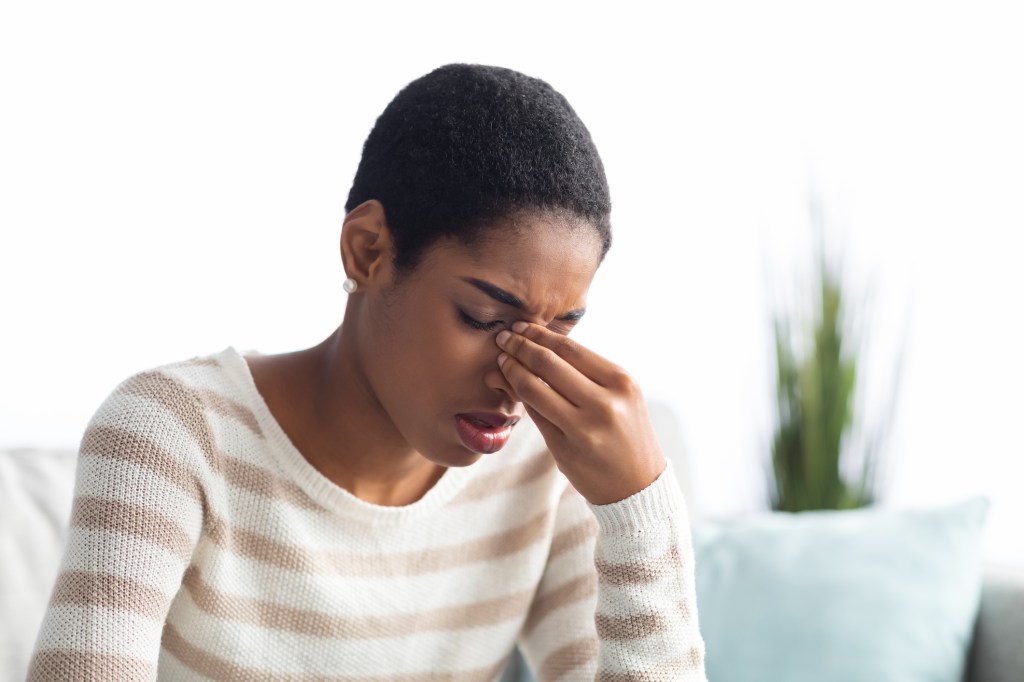
A migraine can feel different for each person. A migraine headache ranges from mild to severe. Head pain can start on one side and shift to the opposite side. You may also have pain around your eyes or temple, and sometimes, around your face, sinuses, jaw or neck.

How often do migraines happen?

The frequency of a migraine varies from person to person. You might have one migraine per year or one per week. On average, most people experience two to four per month. They’re most common in the morning. Most migraines are unpredictable, but sometimes, you can have an idea of when a migraine will happen, like before menstruation or after feeling stress.

What causes a migraine?

Researchers aren’t sure of the exact cause of migraines, but studies show genetics play a role.

When you have a headache, specific nerves in your blood vessels send pain signals to your brain. This releases inflammatory substances into your head’s nerves and blood vessels. It’s unclear why your nerves do that.

What triggers a migraine?

A trigger is something that causes symptoms to start. Some of the most common migraine triggers include:

  • Stress.
  • Hormonal changes.
  • Certain medications.
  • Changes to your sleep.
  • Weather condition changes.
  • Too much physical activity (overexertion).
  • Addictive substances like caffeine or tobacco.
  • Missing a meal.
  • Exposure to bright lights, loud noises or strong odors.

Your healthcare provider can help you identify your triggers. They might recommend keeping a migraine journal to track similarities between migraine attacks.

What foods trigger migraines?

Your body may have a sensitivity to specific chemicals and preservatives in foods. This sensitivity makes a migraine more likely to happen, especially if combined with other triggers.

Some of the most common food triggers include:

  • Aged cheese.
  • Beverages containing alcohol.
  • Chocolate.
  • Food additives like nitrates and MSG.
  • Processed or cured foods (hot dogs, pepperoni).
  • Fermented or pickled foods.

Are migraines hereditary?

Yes, migraines tend to run in biological families. Up to 80% of people with migraines have a first-degree biological relative with the condition.

What are the risk factors for a migraine?

A migraine can affect anyone at any age, from children to adults. Women and people assigned female at birth are more likely than men and people assigned male at birth to experience a migraine.

Other risk factors that may make you more likely to experience a migraine include:

How is a migraine diagnosed?

A healthcare provider will diagnose a migraine after a physical exam and neurological exam. They’ll also learn more about your medical history and biological family health history. Your provider may ask you questions to learn more about your symptoms, including:

  • What symptoms do you experience?
  • Can you describe the feeling and location of your headache?
  • How severe are your symptoms?
  • How long did your symptoms last?
  • Did anything make your headache better or worse?

Your provider may also order blood tests and imaging tests (such as a CT scan or an MRI) to make sure there aren’t any other causes for your headache. An electroencephalogram (EEG) may help your provider rule out other conditions.

Who diagnoses a migraine?

If you think you have a migraine, discuss your symptoms with a primary care physician (PCP) first. They can diagnose migraine headaches and start treatment. Your PCP may refer you to a headache specialist or a neurologist.

How is a migraine treated?

There isn’t a cure for migraines. But a healthcare provider can help you manage migraine symptoms through the following:

  • Taking medications.
  • Avoiding migraine triggers.
  • Using alternative migraine remedies.

What medications treat migraines?

A healthcare provider might recommend taking medications to treat migraines. There are two types of medications available:

  • Medications to stop migraines: You can take these medications at the first sign of a migraine. They stop or reduce migraine symptoms like pain, nausea, sensitivity and more.
  • Medications to prevent migraines: A healthcare provider usually prescribes preventive medications if you experience severe symptoms that interfere with your routine or have frequent migraines. These medications reduce how often and how severe migraines affect you. You can take these medications as directed, usually on a daily basis.

Common medications that stop migraines include:

Common preventive migraine medications include:

Medications come in different forms, like:

  • An injection under your skin (subcutaneous).
  • An oral medication (taken by mouth).
  • A nasal spray.
  • Through an IV (intravenously).
  • Suppository.

You and your healthcare provider will discuss the specific medication, combination of medications and formulations to best manage your symptoms. All medications should be used under the direction of a headache specialist or provider. As with any medication, it’s important to carefully follow your provider’s instructions.

Over-the-counter migraine medications

Over-the-counter migraine medications are effective if you have mild to moderate migraine symptoms. The main ingredients in pain-relieving medications are ibuprofen, aspirin, acetaminophen, naproxen and caffeine.

Be cautious when taking over-the-counter pain relievers. Sometimes, overusing them can cause analgesic-rebound headaches or a dependency problem. If you’re taking any over-the-counter pain medications more than two to three times a week, let your healthcare provider know. They may suggest more effective prescription medications.

Avoiding migraine triggers

A healthcare provider can help you identify what triggers your migraines. They may ask you to keep a migraine journal or diary. A migraine journal can help you keep track of when a migraine happened, how you felt and how long it lasted. You can also add details about the foods you ate or the activities you participated in to learn more about any possible triggers.

There are some smartphone apps available to help you keep a migraine journal.

Once you identify a trigger, you can take steps to avoid it. This isn’t always possible, but awareness of your triggers is helpful to identify them and treat a migraine when it starts.

For example, if stress is a trigger, you may want to speak with a mental health professional to help you manage your stress. If you get migraine symptoms when you miss a meal, set an alarm on your phone to remind you to eat meals on a regular schedule.

Alternative migraine remedies

You may want to try alternative therapies to help you manage migraines. These include:

Talk to your healthcare provider before starting any alternative therapies for migraines.

What migraine treatments are available during pregnancy?

Talk to your healthcare provider if you’re pregnant or plan on becoming pregnant and experience migraines. Your provider might suggest avoiding medications for migraines when you’re pregnant or if you think you may be pregnant. Some medications can negatively affect the fetus’s development.

Your provider can recommend alternative treatment options like an acetaminophen pain reliever for migraines.

How do I deal with a migraine as it happens?

There are certain things you can do to help you feel better when a migraine attack happens, including:

  • Resting in a dark, quiet, cool room.
  • Applying a cold or warm compress or washcloth to your forehead or behind your neck.
  • Massaging your scalp.
  • Applying pressure to your temples in a circular motion.
  • Keeping yourself in a calm state (meditating).

Can a migraine be prevented?

You can’t prevent all migraines. But you can take preventive migraine medications as directed by your healthcare provider to reduce how often and how severe migraine symptoms affect you. You can also learn more about your triggers and work with your healthcare provider to avoid them.

What’s the outlook for a migraine?

Migraines are different for each person. They’re temporary but recurring throughout your life. There’s also no available cure. Your healthcare provider can help you manage migraines so they go away faster and are less intense. It may take time to find a treatment option that’s right for you. Let your healthcare provider know if your symptoms improve or get worse.

When should I see a healthcare provider?

Schedule a visit with your healthcare provider if you experience:

  • New symptoms.
  • Worsening symptoms.
  • Side effects from treatment.

Call 911 (or your local emergency services number) or go to an emergency department right away if you:

  • Experience the worst headache of your life (thunderclap headache).
  • Have new neurological symptoms that you’ve never had before, like difficulty speaking, balance problems, vision issues, confusion, seizures or numbing/tingling sensations.
  • Have a headache after experiencing a head injury.

What questions should I ask my healthcare provider?

  • Will I grow out of migraines?
  • What medications do you recommend?
  • How can I prevent migraines?
  • What type of migraine do I have?
  • Are my migraines considered chronic?

A note from QBan Health Care Services

You’ve probably had a headache before, but a migraine is different. It can feel like the world is ending and there’s nothing you can do to make it go away. Even though your symptoms are temporary, the duration of a migraine can make it feel like time is moving slower and against you. But there are treatment options available to manage migraines as they happen and prevent them from interfering with your day. A healthcare provider can help you with this, so migraines don’t take over your life.

TENSION HEADACHES

Tension headaches are the most common headache type. Healthcare providers may call them tension-type headaches. These headaches may feel like pressure on your forehead and temples. There are home treatments for tension headaches, and healthcare providers may prescribe medication and other therapies that will ease tension headache pain and pressure.

What is a tension headache?

A tension headache is a headache that feels like there’s a tight band wrapped around your head that puts pressure on your forehead and temples. Healthcare providers may call them tension-type headaches. Many factors cause tension headaches, and you may be unable to avoid all potential triggers. Fortunately, there are many things you can do to prevent a tension headache. And if home treatment doesn’t work, healthcare providers may have medications and other therapies to ease tension headache pressure.

Types of tension headaches

Healthcare providers classify tension headaches based on how often you have one. Condition types include:

  • Infrequent episodic: Headaches happen one day a month or fewer.
  • Frequent episodic: You have one to 14 headaches every month for at least three months.
  • Chronic: You have more than 15 headaches every month for three months.

Are tension headaches common?

Tension headaches are the most common primary headache type. Researchers estimate more than 70% of people have episodic tension headaches. They typically affect more women and people assigned female at birth than men and people assigned male at birth.

What are the symptoms of a tension headache?

Symptoms may vary, but most people describe tension headache pain as:

  • Constant mild to moderate pressure and pain.
  • Feeling like something is squeezing the sides of their heads together.
  • Aching or tight neck muscles and shoulder muscles.
  • Sensitivity to light and sound.

These symptoms may come on slowly. They may last about 30 minutes, but sometimes, they last as long as a week. Some people with chronic tension headaches may feel as if they’re always dealing with headache pain and pressure.

What causes tension headaches?

Researchers are still seeking a single cause for tension headaches. Some believe tension headaches start when muscles between your head and neck knot up, eventually tightening your scalp muscles. That muscular ripple effect may happen because you’re stressed or dealing with emotional conflict. Other tension headache causes include:

  • Neck strain from looking down to read or holding a cell phone or landline receiver between your head and shoulder.
  • Eye strain from staring at a computer screen or documents for a long time without taking breaks.
  • Temporomandibular jaw disorder (TMJ).
  • Degenerative arthritis in your neck.
  • Sleep disorders issues like sleep apnea and insomnia.
  • Anxiety.
  • Depression.

What are the complications of tension headaches?

Chronic tension headaches that last for weeks and months may affect your quality of life. For example, a chronic tension headache may make it hard for you to focus on your work or family responsibilities because you’re always dealing with tension headache pressure.

How is a tension headache diagnosed?

Healthcare providers may ask about your medical history and symptoms, including questions like:

  • How often do you have symptoms?
  • Do your symptoms feel worse at certain times of the day?
  • Do your symptoms feel worse after doing certain activities?
  • Do over-the-counter pain relievers help you feel better?

They may do computed tomography (CT) scans and brain magnetic resonance imaging (brain MRI) scans to check for underlying issues.

What are the treatments for tension headaches?

Treatments vary depending on the tension headache type. For example, if you have episodic headaches, your provider may recommend you start over-the-counter pain relievers like:

  • Acetaminophen (Tylenol®).
  • Aspirin.
  • Ibuprofen (Advil®, Motrin®).
  • Naproxen sodium (Aleve®).

If you have chronic tension headaches, your provider may prescribe:

What are treatment side effects or complications?

Side effects and complications vary depending on treatment, but rebound headaches are one common potential side effect of taking over-the-counter and/or prescription pain relievers for tension headaches.

Rebound headaches, or medication overuse headaches, are headaches that happen if you use headache medication too often. Healthcare providers recommend limiting pain relief use to 10 days in any given month.

How can I prevent a tension headache?

Managing stress may be the most effective way to prevent a tension headache. The most effective stress management tools are the ones that you can fit into your daily routine and make you feel good. Some examples include:

  • Massage therapy.
  • Regular exercise.
  • Getting enough rest.

What can I expect if I have a tension headache?

If you’re like most people, you have episodic tension headaches that you can manage with pain relievers and by reducing stress. People with chronic tension headaches may need to take antidepressants or participate in therapy like biofeedback.

How can I get rid of a tension headache?

Over-the-counter pain relievers may help ease occasional tension headaches. Home remedies like placing a hot or cold compress on your head and neck may help.

When should I see my healthcare provider?

Tension headaches aren’t life-threatening, but they can be a sign of a serious medical issue or that an existing issue is getting worse. Talk to a healthcare provider if you have a headache and you have:

  • A stiff neck.
  • Pain or tenderness in your jaw when you chew or at your temple, like when you comb your hair.
  • Fever above 103 degrees Fahrenheit that doesn’t go away.
  • Headaches that feel different or happen more frequently than usual, and you’re age 50 or older.
  • A headache that happens only when you’re lying flat or when you stand up. This is a positional headache.
  • Cancer or an autoimmune disease and notice you’re having more headaches or more severe headaches.
  • Numbness or weakness.

When should I go to the emergency room?

You should go to the ER if you have a sudden severe headache that worsens quickly. You should also get immediate medical care if you have a headache and experience:

  • Confused thoughts, slurred speech or weakness.
  • Changes in your ability to see or speak.
  • Weakness, drowsiness, confusion or loss of balance.
  • Feeling short of breath.

What questions should I ask my healthcare provider?

You may want to ask your provider:

  • What’s causing my tension headache?
  • What treatments do you recommend?
  • Will I always have to deal with tension headaches?

A note from QBan Health Care Services

Tension headaches start in your neck and shoulder muscles as your body deals with stress and other issues. Next, you feel a dull ache in your forehead, like someone’s got your head in their hands.

If that’s your situation, you may be having a tension headache. They may happen occasionally or they can be constant. Either way, talk to a healthcare provider if you have tension headache symptoms. They’ll ask questions to understand why you have these symptoms. If stress is the culprit, your provider also will recommend lifestyle changes and other things you can do to reduce stress and prevent tension headaches. In some cases, healthcare providers may recommend prescription medication or physical therapy.

HEADACHES

Headaches are a very common condition that most people will experience many times during their lives. The main symptom of a headache is pain in your head or face. There are several types of headaches, and tension headaches are the most common. While most headaches aren’t dangerous, certain types can be a sign of a serious underlying condition.

What is a headache?

A headache is a pain in your head or face that’s often described as a pressure that’s throbbing, constant, sharp or dull. Headaches can differ greatly in regard to pain type, severity, location and frequency.

Headaches are a very common condition that most people will experience many times during their lives. They’re the most common form of pain and are a major reason cited for days missed at work or school, as well as visits to healthcare providers.

While most headaches aren’t dangerous, certain types can be a sign of a more serious condition.

What are the types of headaches?

There are more than 150 types of headaches. They fall into two main categories: primary and secondary headaches.

Primary headaches

Dysfunction or over-activity of pain-sensitive features in your head cause primary headaches. They’re not a symptom of or caused by an underlying medical condition. Some people may have genes that make them more likely to develop primary headaches.

Types of primary headaches include:

Some primary headaches can be triggered by lifestyle factors or situations, including:

Primary headaches typically aren’t dangerous, but they can be very painful and disrupt your day-to-day life.

Secondary headaches

An underlying medical condition causes secondary headaches. They’re considered a symptom or sign of a condition.

Types of secondary headaches that aren’t necessarily dangerous and resolve once the underlying condition is treated include:

Types of secondary headaches that can be a sign of a serious or potentially life-threatening condition include:

Spinal headaches: Spinal headaches are intense headaches that occur when spinal fluid leaks out of the membrane covering your spinal cord, usually after a spinal tap. Most spinal headaches can be treated at home, but prolonged, untreated spinal headaches can cause life-threatening complications, including subdural hematoma and seizures.

Thunderclap headaches: A thunderclap headache is an extremely painful headache that comes on suddenly, like a clap of thunder. This type of headache reaches its most intense pain within one minute and lasts at least five minutes. While thunderclap headaches can sometimes be harmless, it’s important to seek immediate medical attention. They can be a sign of:

What’s the difference between a headache and a migraine?

A migraine is a type of primary headache disorder.

A migraine is a common neurological condition that causes a variety of symptoms, most notably a throbbing headache on one side of your head. Migraines often get worse with physical activity, lights, sounds or smells. They usually last at least four hours or even days.

Who do headaches affect?

Anyone can have a headache, including children, adolescents and adults. About 96% of people experience a headache at least once in their life.

About 40% of people across the world have tension-type headaches and about 10% have migraine headaches.

What is the main cause of a headache?

Headache pain results from signals interacting among your brain, blood vessels and surrounding nerves. During a headache, multiple mechanisms activate specific nerves that affect muscles and blood vessels. These nerves send pain signals to your brain, causing a headache.

Are headaches hereditary?

Headaches tend to run in families, especially migraines. Children who have migraines usually have at least one biological parent who also experiences them. In fact, kids whose parents have migraines are up to four times more likely to develop them.

Headaches can also be triggered by environmental factors shared in a family’s household, such as:

  • Eating certain foods or ingredients, like caffeine, alcohol, fermented foods, chocolate and cheese.
  • Exposure to allergens.
  • Secondhand smoke.
  • Strong odors from household chemicals or perfumes.

What headache symptoms require immediate medical care?

If you or your child has any of these headache symptoms, get medical care right away:

  • A sudden, new and severe headache.
  • Headache with a fever, shortness of breath, stiff neck or rash.
  • Headaches that occur after a head injury or accident.
  • Getting a new type of headache after age 55.

Also seek medical care right away if your headache is associated with neurological symptoms, such as:

  • Weakness.
  • Dizziness.
  • Sudden loss of balance or falling.
  • Numbness or tingling.
  • Paralysis.
  • Speech difficulties.
  • Mental confusion.
  • Seizures.
  • Personality changes/inappropriate behavior.
  • Vision changes (blurry vision, double vision or blind spots).

How are headaches evaluated and diagnosed?

If you have headaches often or if they’re very severe, reach out to your healthcare provider.

It’s important to diagnose headaches correctly so your provider can prescribe specific therapy to help you feel better. Your provider will complete a physical examination, discuss your medical history and talk to you about your headache symptoms. This conversation is part of a headache evaluation.

During the headache evaluation, your provider will ask you about your headache history, including:

  • What the headaches feel like.
  • How often the headaches happen.
  • How long the headaches last each time.
  • How much pain the headaches cause you.
  • What foods, drinks or events trigger your headaches.
  • How much caffeine you drink each day.
  • What your stress level is.
  • What your sleep habits are like.

Your headache can be more accurately diagnosed by knowing:

  • When the headache started.
  • Whether there’s a single type of headache or multiple types of headaches.
  • If physical activity aggravates the headache pain.
  • Who else in your family has headaches.
  • What symptoms, if any, occur between headaches.

After completing the medical history part of the evaluation, your provider may perform physical and neurological examinations. They’ll look for signs and symptoms of an illness or condition that may be causing the headache, including:

  • Fever.
  • Infection.
  • High blood pressure.
  • Muscle weakness, numbness or tingling.
  • Excessive fatigue.
  • Loss of consciousness.
  • Balance problems and frequent falls.
  • Vision problems (blurry vision, double vision, blind spots).
  • Mental confusion or personality changes.
  • Seizures.
  • Dizziness.
  • Nausea and vomiting.

Neurological tests focus on ruling out diseases that might also cause headaches. A disorder of your central nervous system might be suspected in the development of serious headaches.

After evaluating the results of your headache history, physical examination and neurological examination, your physician should be able to determine what type of headache you have, whether or not a serious problem is present and whether additional tests are needed.

If they’re unsure of the cause, they may refer you to a headache specialist.

What tests will be done to diagnose headaches?

Although scans and other imagining tests can be important when ruling out other diseases, they don’t help in diagnosing migraines, cluster or tension-type headaches.

But if your healthcare provider thinks that your headaches are being caused by another medical condition, there are several imaging tests they may order.

A CT scan or MRI can help determine if your headaches are connected to an issue with your central nervous system. Both of these tests produce cross-sectional images of your brain that can show any abnormal areas or problems.

How is a headache treated?

Treatment for headaches depends on the type.

One of the most crucial aspects of treating primary headaches is figuring out your triggers. Learning what those are — typically by keeping a headache log — can reduce the number of headaches you have.

Once you know your triggers, your healthcare provider can tailor treatment to you. For example, you may get headaches when you’re tense or worried. Counseling and stress management techniques can help you handle this trigger better. By lowering your stress level, you can avoid stress-induced headaches.

Not every headache requires medication. A range of treatments is available. Depending on your headache type, frequency and cause, treatment options include:

  • Stress management.
  • Biofeedback.
  • Medications.
  • Treating the underlying medical condition/cause.

Stress management for headache

Stress management teaches you ways to cope with stressful situations. Relaxation techniques help manage stress. You use deep breathing, muscle relaxation, mental images and music to ease your tension.

Biofeedback for headache

Biofeedback teaches you to recognize when tension is building in your body. You learn how your body responds to stressful situations and ways to settle it down. During biofeedback, sensors are connected to your body. They monitor your involuntary physical responses to headaches, which include increases in:

  • Breathing rate.
  • Pulse.
  • Heart rate.
  • Temperature.
  • Muscle tension.
  • Brain activity.

Medications for headache

Occasional tension headaches usually respond well to over-the-counter pain relievers. But be aware that using these medications too often can lead to long-term daily headaches (medication overuse headaches).

For frequent or severe headaches, your provider may recommend prescription headache medications. Triptans and other types of drugs can stop a migraine attack. You take them at the first signs of an oncoming headache.

Drugs for high blood pressure, seizures and depression can sometimes prevent migraines. Your healthcare provider may recommend trying one of these medications to reduce headache frequency.

Treating the underlying medical condition causing secondary headache

Treatment for secondary headaches involves treating the underlying medical condition causing it.

For example, surgery is often needed to correct the underlying cause of secondary cough headache.

How can I get rid of a headache?

You can treat the occasional, mild headache at home with over-the-counter pain relievers. Other self-care treatments for headaches include:

  • Applying heat or cold packs to your head.
  • Doing stretching exercises.
  • Massaging your head, neck or back.
  • Resting in a dark and quiet room.
  • Taking a walk.

How can I prevent headaches?

The key to preventing headaches is figuring out what triggers them. Triggers are very specific to each person — what gives you a headache may not be a problem for others. Once you determine your triggers, you can avoid or minimize them.

For example, you may find that strong scents set you off. Avoiding perfumes and scented products can make a big difference in how many headaches you have. The same goes for other common triggers like troublesome foods, lack of sleep and poor posture.

Many people, however, aren’t able to avoid triggers or are unable to identify triggers. In that case, a more personalized multidisciplinary approach with a headache specialist is often necessary.

Can headaches or migraines be cured?

Treating health problems that cause headaches, such as high blood pressure, can eliminate head pain. Recently, there have been several new advancements in our understanding of what causes headaches.

Although researchers are closer than ever before to a cure, at this time, there isn’t a cure for primary headaches. Treatment focuses on relieving symptoms and preventing future episodes.

When should I see my healthcare provider about headaches?

Contact your healthcare provider if you or your child has any of the following symptoms or situations:

  • Experiencing one or more headaches per week.
  • Experiencing headaches that keep getting worse and won’t go away.
  • Needing to take a pain reliever every day or almost every day for your headaches.
  • Needing more than two to three doses of over-the-counter medications per week to relieve headache symptoms.
  • Experiencing headaches that are triggered by exertion, coughing, bending or strenuous activity.
  • Having a history of headaches but experiencing a recent change in your headache symptoms.

A note from QBan Health Care Services

If your headaches are interfering with your daily functioning or affecting your mood, it’s important to talk to your healthcare provider. If possible, try to write down how you feel when you’re experiencing a headache. Keeping a journal of your headaches and how they make you feel can be helpful when you’re talking to your provider.

The information you give your healthcare provider about your headaches is the most important part of the diagnosis process. By giving your provider as much information as possible about your headaches, you’re more likely to get an accurate diagnosis and treatment plan that will help you feel better.

RADICULOPATHY

Radiculopathy can cause pain, numbness and tingling along a pinched nerve in your back. There are three types of radiculopathy — cervical, thoracic and lumbar. Which type you have depends on where in your back your pinched nerve is.

What is radiculopathy?

Radiculopathy is caused by a pinched nerve in your spine. More specifically, it happens when one of your nerve roots (where your nerves join your spinal column) is compressed or irritated. You might see it referred to as radiculitis.

Radiculopathy will cause the area around your pinched nerve to feel painful, numb or tingly.

Depending on where along your spine the pinched nerve is, your healthcare provider will classify the radiculopathy as one of three types:

  • Cervical radiculopathy (neck).
  • Thoracic radiculopathy (upper middle back).
  • Lumbar radiculopathy (low back).

Usually improving your posture, over-the-counter medicine or at-home physical therapy exercises are the only treatments you’ll need to relieve radiculopathy symptoms. In fact, some cases of radiculopathy improve with no treatment at all.

Radiculopathy vs. myelopathy

Both radiculopathy and myelopathy are painful conditions involving your spine. Radiculopathy is a temporary issue caused by a pinched nerve root near your spine. Myelopathy is compression of your spinal cord caused by a trauma, tumor, degenerative disease or infection.

If it’s not treated, myelopathy can worsen over time and cause permanent damage to your nerves. Radiculopathy is a temporary issue that heals over time and often goes away without treatment.

It can be hard to tell what’s causing your pain. That’s why it’s important to talk to your healthcare provider as soon as you notice any new symptoms — especially if they last more than a few days.

Radiculopathy vs. spondylolysis

Spondylolysis is a weakness at the point your vertebrae (the bones that make up your spine) connect together. This can lead to small stress fractures that cause pain, usually in your lower back. It usually affects teens going through growth spurts.

Radiculopathy can be caused by bones in your spine moving out of place, but symptoms like pain are caused when your nerve roots are compressed or irritated, and not by a broken bone.

Radiculopathy vs. sciatica

Both radiculopathy and sciatica are caused by pinched nerves.

The difference is which nerves are pinched causing the pain. Radiculopathy happens when a nerve along your spine is irritated or compressed. Sciatica is the pain or discomfort you feel when your sciatic nerve — the longest nerve in your body that starts in your lower back and runs down the back of each of your legs — gets compressed or pinched.

Radiculopathy usually hurts in the area of your back near the pinched nerve. Sciatica is a type of radiculopathy that causes pain along your sciatic nerve in your lower back and down your legs.

Who does radiculopathy affect?

Radiculopathy can affect anyone, but it’s more common in people older than 50.

How common is radiculopathy?

Radiculopathy is rare. While neck pain and back pain — especially lower back pain — are common problems, they’re rarely caused by radiculopathy.

How does radiculopathy affect my body?

The most obvious way radiculopathy affects your body is the pain and other symptoms it causes around your pinched nerve.

Depending on how severe your symptoms are — and which type of radiculopathy you have — it might be hard or uncomfortable to sit, stand or move. For example, if you have cervical radiculopathy, it might be painful and difficult to move your neck.

What are radiculopathy symptoms?

Symptoms of radiculopathy include:

  • Pain in the area around your affected nerve.
  • Tingling.
  • Numbness.
  • Muscle weakness.

Where you experience symptoms depends on which type of radiculopathy you have.

  • Cervical radiculopathy: You might have pain and other symptoms in and around your neck, but these symptoms can radiate (spread out) to your arms and hands, too.
  • Thoracic radiculopathy: You’ll likely have pain in and around your chest, including when you breathe in and out.
  • Lumbar radiculopathy: The pain or numbness in your lower back can spread to your legs.

Some radiculopathy symptoms are similar to other, much more serious issues. Don’t ignore pain in your chest, trouble breathing or numbness in your limbs. Talk to your healthcare provider as soon as you notice these symptoms.

What causes radiculopathy?

Anything that compresses or irritates the roots of your spinal nerves can cause radiculopathy, including:

  • Traumas like falls or car accidents.
  • Bone spurs growing on one of your vertebrae.
  • A herniated disc (also referred to as slipped, ruptured or bulging discs).

You can also develop radiculopathy with no direct cause other than getting older. As you age, your bones and the discs in your spine lose their shape and flexibility. This natural degeneration and weakening can cause your spine to shift enough to pinch a nerve.

How is radiculopathy diagnosed?

Your healthcare provider will diagnose radiculopathy with a physical exam and imaging tests. They’ll look at your back and spine, talk to you about your symptoms and ask about the different sensations you’re feeling.

You’ll probably need at least one of a few imaging tests, including:

  • X-ray: An X-ray can show narrowing and changing alignment of your spinal cord, as well as any spinal fractures.
  • Computed tomography (CT) scan: A CT scan shows 3D images and more detail of your spine than an X-ray can.
  • Magnetic resonance imaging (MRI): An MRI can show if damage to soft tissues is causing the nerve compression. It will also show any damage to your spinal cord.
  • Electromyography (EMG): An EMG measures electrical impulses in your muscles. This can help determine if a nerve is working as it should. This helps your healthcare provider know if your symptoms are caused by pressure on your spinal nerve roots or if another condition (like diabetes) damaged your nerves.

How is radiculopathy treated?

Treatment depends on which type of radiculopathy you have (where the pinched nerve is along your spine) and how severe your symptoms are. Some people never need formal treatment if their symptoms improve on their own in a few days or weeks.

If you do need treatment, it might include some or all of the following:

  • Ice or heat: Your healthcare provider will tell you how often to ice or apply heat to your back to reduce swelling or relax tight muscles.
  • Adjusting your posture or physical therapy: Stretches and exercises that target the area around your spine can help ease pressure on your nerves and relieve pain. Improving your overall posture can help reduce stress on your spine and relieve your symptoms. Your healthcare provider or physical therapist will advise you on which types of exercises are best for the type of radiculopathy you have.

What medications are used to treat radiculopathy?

  • Over-the-counter NSAIDs: Most people only need over-the-counter NSAIDs (like aspirin or ibuprofen) to treat their radiculopathy symptoms. Talk to your healthcare provider before taking an NSAID for longer than 10 days.
  • Corticosteroids:Your healthcare provider might prescribe strong anti-inflammatory medications like prednisone to relieve your pain. These can be taken as pills or injected directly into the affected area of your back.

Radiculopathy surgery

It’s rare to need surgery to treat radiculopathy. Your healthcare provider will likely only recommend surgery if you have severe symptoms that affect your quality of life and don’t respond to other treatments. They’ll tell you which type of surgery you’ll need and what to expect.

How do I manage my radiculopathy symptoms?

Talk to your healthcare provider or physical therapist about how you can adjust your posture to make your daily routine more comfortable. They’ll recommend how you can comfortably sit, stand and sleep without aggravating your radiculopathy.

If your healthcare provider or physical therapist shows you stretches or exercises to strengthen your core muscles, try to do them as often as they recommend.

Don’t force yourself to do anything that hurts while you’re recovering, though. It might make your symptoms worse. Talk to your healthcare provider or physical therapist if the exercises they provide you are painful. They’ll tell you how to work through them safely.

How soon after treatment will I feel better?

You should feel better over time as you start treating radiculopathy symptoms. Some people feel better in a few days, but sometimes it takes a few weeks.

How can I prevent radiculopathy?

Many of the causes of radiculopathy can’t be prevented. Maintaining good spine health and posture can help prevent some of the degeneration that can lead to radiculopathy.

What can I expect if I have radiculopathy?

You should expect to make a full recovery from an episode of radiculopathy. It can be very painful and inconvenient, but it’s usually a temporary condition.

How long does radiculopathy last?

It depends on what caused your radiculopathy, and which type you’re experiencing. In general, most people feel better in a few weeks (or sooner). It might be longer if you have severe symptoms or other conditions that affect your spine.

Will I have to miss work or school?

If you can do your job or schoolwork without aggravating your symptoms, you shouldn’t have to miss work or school while you’re recovering from radiculopathy. Talk to your healthcare provider before resuming any physical activities.

When should I see my healthcare provider?

Talk to your healthcare provider if you develop new symptoms in your back or along your spine, especially if they’re getting worse over a few days. Lots of issues can have similar symptoms, so it’s important to visit your healthcare provider right away. They’ll make sure you don’t have a more serious condition or injury.

When should I go to ER?

Go to the emergency room right away if you’ve experienced a trauma or you can’t move your hands, arms, legs or neck the way you usually can.

What questions should I ask my doctor?

  • What type of radiculopathy do I have?
  • Which treatments will I need?
  • How long will it take to heal?
  • What imaging tests will I need?

A note from QBan Health Care Services

Almost everyone experiences back pain at some point in their lives. There’s a difference between occasional aches and pains and a painful condition like radiculopathy, though. It can be scary to hear that something is wrong near your spine, but all forms of radiculopathy are very treatable and very rarely require surgery. You should make a full recovery with at-home treatments and by giving your body time to heal.

SPONDYLOLYSIS

Spondylolysis is a small crack between two vertebrae (the bones in your spine). Spondylolysis usually causes lower back pain. Most people don’t need surgery to treat it. Rest, medication and physical therapy are most successful when started early, so visit a healthcare provider if you or your child have back pain.

What is spondylolysis?

“Spondylolysis” is the medical term for a small crack (fracture) between two vertebrae in your spine. Your vertebrae are the 33 bones that make up your spinal column. A single bone in your spine is a vertebra — vertebrae is the plural form.

Healthcare providers sometimes refer to spondylolysis as pars defect or pars fractures because it affects your pars interarticularis — the tiny ridges of bone that link your vertebrae together.

Spondylolysis most commonly affects your lower back (lumbar spine), but it can also happen in the other sections of your spine — in your neck (cervical spine) or middle back (thoracic spine).

How common is spondylolysis?

Experts estimate that spondylolysis affects less than 10% of Americans each year. It’s more common in kids and teens, especially children who play contact sports.

What are the symptoms of spondylolysis?

Lower back pain is the most common spondylosis symptom. The pain usually:

  • Spreads (radiates) from your lower back into your thigh and butt muscles (buttocks).
  • Feels like a muscle strain in or around your lower back.
  • Gets worse during physical activity and improves with rest or when you’re less active.

Some people with spondylolysis never experience symptoms. These people may only learn they have it when they have an imaging test for another reason later on.

What causes spondylolysis?

Damage to part of your vertebrae called the pars interarticularis causes spondylolysis.

The pars interarticularis are thin pieces of bone that link your vertebrae directly above and below each other to form a working unit. These links let your spine move and flex. Anything that damages your pars interarticularis can crack them. Providers call these cracks pars fractures.

The most common causes of pars fractures include:

  • Overuse: Repetitive motions that put stress on your low back cause wear and tear on your vertebrae. Over time, this damage can add up to cause a pars fracture. Doing physical work for your job, playing contact sports and repeatedly injuring your low back can all damage your vertebrae.
  • Growth spurts: Some kids and teens develop spondylolysis when they’re going through a growth spurt — a period when their bodies are physically growing and changing quickly.
  • Genetics: Some people are born with thinner vertebrae. This can make you more likely to experience a pars fracture.

Spondylolysis risk factors

Anyone can experience spondylolysis. Certain groups of people have a higher risk of a pars fracture, including:

  • Athletes who play contact sports like football, gymnastics or weightlifting.
  • Kids and teens whose bodies are still rapidly growing and changing.
  • People of Indigenous Alaskan descent. Studies have found that people with Native Alaskan ethnicity are more likely to be born with thinner vertebrae.

What are the most common complications of spondylolysis?

The back pain that comes with spondylolysis can also lead to reduced mobility (how well or comfortably you can move).

Untreated spondylolysis can lead to spondylolisthesis. Spondylolisthesis happens when your vertebrae are cracked or weakened enough by spondylolysis to slip out of place. If a slipped vertebra presses on a nerve, you may develop shooting pain in your legs (sciatica). Some people need surgery to relieve spondylolisthesis symptoms and get back to their normal routine.

How is spondylolysis diagnosed?

A healthcare provider will diagnose spondylolysis with a physical exam and imaging tests. They’ll ask you about your symptoms and medical history. Tell your provider when you first noticed pain in your back and what you were doing right before you started feeling it.

What tests are done to diagnose spondylolysis?

Your provider will use imaging tests to take pictures of your vertebrae and the tissue around your spine, including:

How is spondylolysis treated?

Your provider will treat your pain and other symptoms to give the pars fracture time to heal. Depending on which vertebrae are affected and how severe the cracks are, you might need treatment anywhere from a few weeks up to a few months.

The most common spondylolysis treatments include:

  • Rest: Taking a break from sports and other intense physical activities reduces stress on your spine.
  • Medications: Over-the-counter NSAIDs can help reduce pain and inflammation. Don’t take over-the-counter pain relievers for more than 10 days in a row without talking to your provider.
  • Corticosteroids: Corticosteroids reduce inflammation. Your provider might prescribe you an oral medication that you’ll take by mouth. They might also inject medication directly into the affected area to help relieve pain.
  • Physical therapy: A physical therapist is a healthcare provider who helps you improve how your body performs physical movements. They’ll help you manage symptoms like pain, stiffness and discomfort that make it hard to move. A physical therapist will give you exercises that will strengthen the muscles around your spine.
  • Bracing: Your provider might recommend you wear a back brace to stabilize your spine while the pars fracture heals.

Does spondylolysis require surgery?

It’s rare to need surgery for spondylolysis. Most of the time, people feel better with nonsurgical treatments.

Some people need surgery to stabilize their spine. During a pars repair surgery, your surgeon can usually fix a pars fracture without needing to perform a spinal fusion (fusing two vertebrae together to form one bone). If you need surgery, your provider or surgeon will tell you what to expect and how long it will take to recover.

How long does spondylolysis take to heal?

Pars fractures can take up to six months to heal. Most people with spondylolysis begin feeling better as soon as they start treatment. Follow your treatment plan for as long as your provider or physical therapist suggests, even if your symptoms start to get better sooner. It’s important to give your spine all the time it needs to heal completely.

Ask your provider when you can start playing sports or doing intense physical activity again.

Can spondylolysis be prevented?

You can’t usually prevent spondylolysis. Follow these general safety tips to reduce your risk of a pars fracture:

  • Always wear your seatbelt, including the shoulder harness around the upper half of your body.
  • Wear the right protective equipment for all activities and sports.
  • Make sure your home and workspace are free from clutter that could trip you or others.
  • Always use the proper tools or equipment at home to reach things. Never stand on chairs, tables or countertops.
  • Follow a diet and exercise plan that will help you maintain good bone health.
  • Talk to your provider about a bone density test if you’re older than 50 or if you have a family history of osteoporosis.
  • Use a cane or walker if you have difficulty walking or have an increased risk of falls.

What can I expect if I have spondylolysis?

If you have spondylolysis, nonsurgical treatments like rest, medication and physical therapy should improve your symptoms. These treatments can’t undo the fracture, but they can help you return to your daily activities without pain as soon as possible.

When can I return to physical activities and sports?

Talk to your provider before resuming intense physical activity. Even if your pain and other symptoms have improved, your vertebrae need time to heal.

Your provider will monitor your treatment progress. As you start to have less pain and more flexibility, you’ll be able to return to your regular activities gradually. People recovering from spondylolysis usually need at least a few weeks (and up to a few months) of treatment before they can resume intense physical activities like playing sports and working out.

When should I see my healthcare provider?

The sooner you see a healthcare provider, the faster they can diagnose and treat spondylolysis. Visit a healthcare provider as soon as you notice low back pain that lasts more than a few days or is severe enough that it makes it hard or impossible to participate in your usual routine.

When should I go to the emergency room?

Go to the emergency room if you experience a trauma like a fall or car accident. Go to the ER if you lose feeling or can’t move a part of your body.

What questions should I ask my doctor?

  • Do I have spondylolysis or another type of back issue?
  • Which treatments will I need?
  • Will I need surgery?
  • When can I return to physical activities like playing sports or lifting weights?
  • How long will it take to recover?

What is the difference between spondylolysis and spondylolisthesis?

Spondylolysis and spondylolisthesis are related conditions that affect your spine.

Spondylolisthesis is when one vertebra slips out of place over the vertebra below it in your spine.

Spondylolysis is a common cause of spondylolisthesis, because the crack (called a pars fracture) in a vertebra can cause it to slip out of place and become spondylolisthesis.

What is the difference between spondylolysis and spondylosis?

Spondylolysis and spondylosis have similar sounding names and are both conditions that affect your spine. They both also cause symptoms like pain and stiffness.

Spondylolysis is a specific injury — having a pars fracture in the pars-interarticularis in your spine.

Spondylosis is a general term that applies to any age-related breakdown (degeneration) in your spine.

Will spondylolysis go away on its own?

Pars fractures involved in spondylolysis usually heal over time. But a healthcare provider should still diagnose and treat them. Visit a provider if you’re experiencing lower back pain that lasts more than a few days or is severe enough to affect your daily routine. They’ll suggest treatments that will make sure your vertebrae heal safely and as fast as possible.

A note from QBan Health Care Services

Spondylolysis is caused by tiny cracks where the bones in your spine link together. It usually causes pain in your lower back. Most people with spondylolysis are able to return to sports and activities as soon as their vertebrae heal and their pain goes away.

Don’t ignore lower back pain — especially if it lasts more than a few days or prevents you from doing your usual activities. A healthcare provider will diagnose the cause of your pain and recommend treatments that protect your spine and help it heal.

SPONDYLOLISTHESIS

Spondylolisthesis is a spinal condition that causes lower back pain. It occurs when one of your vertebrae, the bones of your spine, slips out of place onto the vertebra below it. Most of the time, nonsurgical treatment can relieve your symptoms. If you have severe spondylolisthesis, surgery is successful in most cases.

What is spondylolisthesis?

Spondylolisthesis is a condition involving spine instability, which means the vertebrae move more than they should. A vertebra slips out of place onto the vertebra below. It may put pressure on a nerve, which could cause lower back pain or leg pain.

The word spondylolisthesis (pronounced spohn-di-low-less-THEE-sis) comes from the Greek words spondylos, which means “spine” or “vertebra,” and listhesis, which means “slipping, sliding or movement.”

Is spondylolisthesis the same as spondylolysis?

Both spondylolysis and spondylolisthesis cause low back pain. They are related but not the same.

  • Spondylolysis: This spine defect is a stress fracture or crack in spine bones. It’s common in young athletes.
  • Spondylolisthesis: This condition is when a vertebra slips out of place, resting on the bone below it. Spondylolysis may cause spondylolisthesis when a stress fracture causes the slipping. Or the vertebra may slip out of place due to a degenerative condition. The disks between vertebrae and the facet joints (the two back parts of each vertebrae that link the vertebrae together) can wear down. Bone of the facet joints actually grows back and overgrows, causing an uneven and unstable surface area, which makes the vertebrae less able to stay in place. No matter what the cause, when the vertebra slips out of place, it puts pressure on the bone below it. Most cases of spondylolisthesis do not cause symptoms. If you feel leg pain, it can also be caused by compression or a “pinching” of the nerve roots that exit the spinal canal (the tunnel created by the interlocking vertebrae of the spine). The compression or pinching is due to the vertebrae slipping out of position and narrowing the needed space for the nerves.

What are the types of spondylolisthesis?

Types of spondylolisthesis include:

  • Congenital spondylolisthesis occurs when a baby’s spine doesn’t form the way it should before birth. The misaligned vertebrae put the person at risk for slippage later in life.
  • Isthmic spondylolisthesis happens as a result of spondylolysis. The crack or fracture weakens the bone.
  • Degenerative spondylolisthesis, the most common type, happens due to aging. Over time, the disks that cushion the vertebrae lose water. As the disks thin, they are more likely to slip out of place.

Less common types of spondylolisthesis include:

  • Traumatic spondylolisthesis happens when an injury causes vertebrae to slip.
  • Pathological spondylolisthesis occurs when a disease — such as osteoporosis — or tumor causes the condition.
  • Post-surgical spondylolisthesis is slippage as a result of spinal surgery.

How common is spondylolisthesis?

Spondylolisthesis and spondylolysis occur in about 4% to 6% of the adult population. It’s possible to live with spondylolisthesis for years and not know it, since you may not have symptoms.

Degenerative spondylolisthesis (which occurs due to aging and wear and tear on the spine), is more common after age 50 and more common in women than men.

When back pain occurs in teens, isthmic spondylolisthesis (usually caused by spondylolysis) is one of the most common causes.

Who is at risk for spondylolisthesis?

You may be more likely to develop spondylolisthesis due to:

  • Athletics: Young athletes (children and teens) who participate in sports that stretch the lumbar spine, such as gymnastics and football, are more likely to develop spondylolisthesis. The vertebra slippage tends to occur during children’s growth spurts. Spondylolisthesis is one of the most common reasons for back pain in teens.
  • Genetics: Some people with isthmic spondylolisthesis are born with thinner section of the vertebra called the pars interarticularis. This thin piece of bone connects the facet joints, which link the vertebrae directly above and below to form a working unit that permits movement of the spine. These thinner areas of vertebrae are more likely to fracture and slip. Degenerative spondylolisthesis also has a large genetic component.
  • Age: As we age, degenerative spine conditions can develop, which is when wear and tear on the spine weakens the vertebrae. Older adults with degenerative spinal conditions may be at higher risk for spondylolisthesis. It becomes more common after age 50.

What is low-grade versus high-grade spondylolisthesis?

To determine how severe spondylolisthesis is, your healthcare provider gives it a grade:

  • Low-grade (Grade I and Grade II) typically don’t require surgery. Low grade cases are usually seen in adolescents with isthmic spondylolisthesis and in almost all cases of degenerative spondylolisthesis.
  • High-grade (Grade III and Grade IV) may require surgery if you’re in a lot of pain.

Will I need surgery for spondylolisthesis?

Your healthcare provider will start with nonsurgical options, such as rest and physical therapy. These treatments often relieve symptoms. Your healthcare provider may recommend surgery if you:

  • Have high-grade spondylolisthesis.
  • Experience severe pain.
  • Tried nonsurgical treatments but still have symptoms.

What causes spondylolisthesis?

Overextending the spine is one of the main causes of spondylolisthesis in young athletes. Genetics may play a role, too. Some people are born with thinner vertebral bone. In older adults, wear and tear on the spine and disks (the cushions between vertebrae) can cause this condition.

What are the symptoms of spondylolisthesis?

You may not experience any symptoms of spondylolisthesis. Some people have the condition and don’t even know it. If you do have symptoms, lower back pain is typically the main one. The pain may extend to the buttocks and down the thighs. You may also experience:

  • Muscle spasms in the hamstring (muscles in the back of the thighs).
  • Back stiffness.
  • Difficulty walking or standing for long periods.
  • Pain when bending over.
  • Numbness, weakness or tingling in the foot.

How is spondylolisthesis diagnosed?

Your healthcare provider will do a physical exam and ask you about your symptoms. You will then likely need an imaging scan to confirm the diagnosis.

What imaging tests will I need?

  • Spinal X-ray helps healthcare providers see if a vertebra is out of place.
  • CT scan or MRI scan may be necessary to see the spine in more detail or to see soft tissue such as discs and nerves.

How do healthcare providers treat spondylolisthesis?

Treatment depends on the grade of the slippage, your symptoms, age and overall health. Your healthcare provider will discuss treatment options with you. You may need medication, physical therapy or surgery.

What nonsurgical treatments are available for spondylolisthesis?

Nonsurgical treatments include:

  • Rest: Take a break from strenuous activities and sports.
  • Medication: An over-the-counter nonsteroidal anti-inflammatory drug (NSAID), such as ibuprofen (Motrin®) or naproxen (Aleve®), can bring relief. If those don’t work, your healthcare provider may prescribe other medications.
  • Injections: You receive an injection of steroid medications directly into the affected area.
  • Physical therapy: A physical therapist can teach you targeted exercises to strengthen your abdomen (belly) and back. Daily exercises often relieve pain after a few weeks.
  • Bracing: A brace can help stabilize your spine. The brace limits movement so that fractures can heal. Braces are not used in adults.

How do I know if I need surgery for spondylolisthesis?

You may need surgery if you have high-grade spondylolisthesis, the pain is severe or you’ve tried nonsurgical treatments without success. The goals of spondylolisthesis surgery are to:

  • Relieve pain from the irritated nerve.
  • Stabilize the spine where the vertebra has slipped.
  • Restore your function.

What happens during surgery for spondylolisthesis?

Surgery for back pain due to spondylolisthesis typically involves spinal decompression, with or without fusion. Decompression alone is almost never done in isthmic spondylolisthesis. Studies show fusion with decompression may give better outcome than decompression alone. During a decompression surgery, your surgeon removes bone and disk from the spine. This procedure gives the nerves space inside the spinal canal, relieving pain.

For a fusion surgery, your surgeon fuses (connects) the two affected vertebrae. As they heal, they form into one bone, eliminating movement between the two vertebrae. You may experience some limited spinal flexibility as a result of the surgery.

Will spondylolisthesis come back?

Most of the time, pain is gone after you recover from spondylolisthesis surgery. You can gradually begin to resume your activities until you are back to full function and movement.

How can I reduce my risk of spondylolisthesis?

You can take steps to reduce your risk of spondylolisthesis:

  • Do regular exercises for strong back and abdominal muscles.
  • Maintain a healthy weight. Excess weight puts added stress on your lower back.
  • Eat a well-balanced diet to keep your bones well-nourished and strong.

After treatment, how can I prevent spondylolisthesis from returning?

Your healthcare provider may recommend exercises to strengthen the back and abdominal muscles, especially for children. Make sure to have regular checkups so your healthcare provider can detect any problems early on.

The chances of spondylolisthesis coming back, or recurring, are higher if the grade was higher. For people with a minor slippage, the condition may never come back.

What is the outlook for people with spondylolisthesis?

Surgery has a high success rate. People who have surgery for spondylolisthesis often return to an active life within a few months of surgery. You will likely need rehabilitation after surgery to help you get back to full function.

Will spondylolisthesis go away on its own?

While the condition won’t go away on its own, you can often experience relief through rest, medication and physical therapy.

Can spondylolisthesis be reversed?

Nonsurgical treatments cannot undo the crack or slippage, but they can provide long-term pain relief. Surgery can relieve pressure on the nerves, stabilize the vertebrae and restore your spine’s strength.

What can I do about pain from spondylolisthesis?

First, take a break from strenuous activity and exercise. Try over-the-counter medications to relieve pain and inflammation. And make sure to see your healthcare provider, who can help you figure out next steps.

A note from QBan Health Care Services

Spondylolisthesis is a common cause of back pain, but it is not dangerous and doesn’t need to take over your life. Many treatments are available, from medication and physical therapy to spinal surgery. If you have low back pain or find it difficult to walk, stand or bend over, talk to your healthcare provider to find out how you can feel better.

SCOLIOSIS

Scoliosis is a side-to-side curve of your spine. This differs from your body’s natural front-to-back curve. It’s usually mild and doesn’t cause symptoms, but it can lead to back pain and abnormal posture. A healthcare provider most often diagnoses this condition during adolescence. Treatment includes physical therapy, braces and surgery.

What is scoliosis?

Scoliosis is an abnormal side-to-side curvature of your spine. Your spine (backbone) naturally has a slight forward and backward curve. With scoliosis, your spine curves to the left and right into a C or S shape.

Most cases of scoliosis are mild, don’t cause symptoms and don’t need treatment. Severe cases can cause uneven posture and pain. Treatment may include wearing a brace or surgery.

What are the types of scoliosis?

There are three types of scoliosis:

  • Idiopathic scoliosis: This is the most common type. “Idiopathic” means the cause is unknown. Research does indicate that it runs in families and has a genetic (hereditary) link.
  • Congenital scoliosis: This is a rare spine abnormality that a healthcare provider may detect at birth. It occurs when vertebrae (the bones that make up your spine) don’t form as they should during embryonic development.
  • Neuromuscular scoliosis: Abnormalities in the muscles and nerves that support your spine cause this type. It usually happens alongside neurological (nerve) or muscular conditions like an injury, cerebral palsy, spina bifida or muscular dystrophy.

You may hear your provider refer to scoliosis diagnosed during adulthood as adult-onset scoliosis or degenerative scoliosis. You may have had mild, undiagnosed scoliosis throughout your life. Symptoms can increase or appear as your body ages, which results in a late diagnosis. Specifically, adult-onset scoliosis happens when your disks and joints weaken or you lose bone density (osteoporosis).

Healthcare providers use different names to refer to idiopathic scoliosis according to when it’s diagnosed:

  • Infantile scoliosis: Younger than age 3.
  • Juvenile scoliosis: Age 4 through 10.
  • Adolescent scoliosis: Age 11 through 18.
  • Adult idiopathic scoliosis: Diagnosed any time after age 18 when skeletal growth is complete.

How common is scoliosis?

Scoliosis affects an estimated 2% of people around the world. In the United States, this equals over 6 million people.

What are the symptoms of scoliosis?

Scoliosis usually doesn’t cause symptoms, but they may include:

  • Back pain.
  • Difficulty standing upright.
  • Core muscle weakness.
  • Leg pain, numbness or weakness.

What are the signs of scoliosis?

Signs of scoliosis may include:

  • Uneven shoulders.
  • Shoulder blades that stick out.
  • Head that doesn’t center above your pelvis.
  • Uneven waist.
  • Elevated hips.
  • Constant leaning to one side.
  • Uneven leg length.
  • Changes in skin appearance or texture (dimples, hair patches, skin discoloration). These occur on your back along your spine.

If you notice any of these signs, contact a healthcare provider for a screening.

Over time, you may notice:

  • Height loss.
  • Uneven alignment of your pelvis and hips.

What part of the spine does scoliosis affect?

Scoliosis can affect any part of your spine. There are some differences according to age:

  • Adolescents: Most cases occur in the thoracic spine (rib cage) area.
  • Adults: The main concern is in the lumbar or lower spine. The lumbar spine is most susceptible to the changes seen with aging or degeneration, which increases symptoms like pain.

What causes scoliosis?

The cause of scoliosis varies depending on the type but may include:

  • Vertebrae malformation during embryonic development.
  • A genetic change.
  • A spine injury.
  • A tumor on your spine.
  • A condition that affects your nerves or muscles.

Most often, though, healthcare providers can’t identify a specific cause (idiopathic scoliosis).

What are the risk factors for scoliosis?

You’re more at risk of developing scoliosis if you:

  • Have a biological family history of scoliosis.
  • Have an underlying condition or injury that affects your spine, muscles and nerves.

Scoliosis equally affects all genders and sexes, including people assigned male at birth (AMAB) and people assigned female at birth (AFAB). But people AFAB are more likely to need treatment due to the severity of the curve.

Is scoliosis genetic?

You’re more likely to develop scoliosis if someone in your biological family has the condition. But not all cases of scoliosis are genetic.

What are the complications of scoliosis?

Without treatment, severe cases of scoliosis can lead to:

Contact emergency services if you have trouble breathing.

What is a scoliosis screening?

The first step of a scoliosis diagnosis is a scoliosis screening. You may remember getting a scoliosis screening during a pediatric wellness visit with your primary care physician or a school nurse. During a screening, a provider will ask you to:

  • Remove your shirt to see your back.
  • Stand up straight.
  • Bend forward (like you’re touching your toes).

A screening helps your provider look at your posture, alignment and spinal curvatures. If the physician isn’t your primary care provider, they may recommend you visit one if the screening indicates you may have scoliosis.

Scoliosis screenings happen during childhood and adolescence to detect scoliosis early. An early diagnosis can help your provider offer more treatment options, if necessary.

How is scoliosis diagnosed?

A healthcare provider will diagnose scoliosis after a physical exam. They may perform a screening in their office, which will include having you stand up straight and then bend forward to touch your toes. Your provider will examine your back to check the shape of your spine and see how you move around. They’ll also check your nerves by testing your reflexes and muscle strength.

Before your healthcare provider can suggest a treatment plan, they’ll ask you questions about the following:

  • Your medical history and family medical history.
  • The date when you first noticed a change in your spine or the date of your initial screening.
  • Symptoms (if you have any).
  • Any bowel, bladder or motor symptoms, which may be signs of more serious nerve damage or pressure caused by scoliosis.

If needed, your provider may order imaging tests. X-rays taken from the front and side will show a full picture of your spine. Your provider can then determine if you have scoliosis and if so, to what degree. Other imaging tests may include an MRI (magnetic resonance imaging) or CT (computed tomography) scan.

If your provider determines that you have scoliosis that requires treatment, they’ll refer you to an orthopaedic spine specialist.

When is scoliosis diagnosed?

A scoliosis diagnosis is most common during adolescence, between ages 10 and 15.

As you age, your spine curves (degeneration). For this reason, adults can get a scoliosis diagnosis later in life. This usually happens if scoliosis is mild and goes undetected during childhood.

How is scoliosis measured?

A healthcare provider will measure the curve of your spine in degrees. They’ll rate the severity based on the degree of the curve:

  • No scoliosis diagnosis: Less than 10 degrees.
  • Mild scoliosis: Between 10 to 24 degrees.
  • Moderate scoliosis: Between 25 to 39 degrees.
  • Severe scoliosis: More than 40 degrees.

This is similar to how you measure angles with a protractor in geometry class. Your provider will use a device called a scoliometer to measure the curve by placing the tool on your back. They may also order an X-ray of your spine to measure the curve.

How is scoliosis treated?

Treatment for scoliosis isn’t necessary for all cases.

If your provider recommends treatment, they’ll consider several factors:

  • The type of scoliosis.
  • The degree of the curve.
  • Your family history of scoliosis.
  • Your age.
  • The number of remaining growth years until skeletal maturity.

Treatment focuses on relieving symptoms and not necessarily straightening the curve. The goal is to decrease symptoms and curve progression and improve the function of your spine.

There are two types of treatment for scoliosis:

  • Nonsurgical (conservative) treatment.
  • Surgery.

Conservative scoliosis treatment

Most cases of scoliosis don’t require surgery. Instead, providers recommend conservative treatment first, which may include:

  • Visiting a healthcare provider regularly (usually every six months) to monitor the degree of the curve.
  • Taking over-the-counter pain relievers or anti-inflammatories (as needed or as directed by your provider).
  • Exercising to strengthen your core muscles and improve flexibility.
  • Wearing a back brace to support your spine.
  • Managing any underlying conditions.

Your provider may recommend physical therapy. This can help you strengthen your muscles and relieve pain. Your physical therapist may help you with the following:

  • Improving your posture.
  • Low-impact exercises, such as swimming.
  • Daily stretching.
  • Physical activity guidance.

Scoliosis surgery

Surgery may be an option to treat some types of scoliosis that don’t respond to conservative treatment. Your provider may recommend surgery to:

  • Stabilize your spine.
  • Restore balance.
  • Relieve pressure on nerves.

There are different techniques your surgeon may use to treat scoliosis, including:

  • Spinal fusion: To stabilize your spine, your surgeon will fuse the bones of your spine together. Then, they’ll use metal braces to hold your spine in place.
  • Expandable rod: A surgeon will insert an expandable rod along the vertebrae to support a child’s growing spine. They’ll adjust the length of the rod as a child grows.

Advances in surgical techniques and computer-assisted technologies make less invasive approaches possible and recovery time quicker.

Are there complications of scoliosis surgery?

Scoliosis surgery is a safe procedure, but complications are possible and may include:

Can scoliosis be prevented?

There’s no known way to prevent scoliosis.

If you have scoliosis, a healthcare provider might recommend strengthening your back and abdominal muscles with stretching and exercises. These can help prevent the curve in your spine from getting worse.

What can I expect if I have scoliosis?

Though scoliosis is often asymptomatic, symptoms may appear as your body ages and natural spine degeneration occurs. A healthcare provider can help you manage symptoms if they become bothersome.

Scoliosis can change the way your body looks depending on the degree of the spinal curve. This might be challenging for your emotional well-being. A mental health professional can help you manage how you feel about your body.

What’s the outlook for scoliosis?

The outlook for scoliosis can vary depending on the type and severity. Most people can live normally, without any changes to their routines.

What physical activities are safe with scoliosis?

Talk to your healthcare provider or physical therapist about what activities are safe to do. Most people with scoliosis can participate in physical activities and exercise. Routine movement can reduce the severity of symptoms. If an activity causes pain, listen to your body and stop.

Can playing sports make scoliosis worse?

Most cases of scoliosis are diagnosed during adolescence. This is the time when many children are eager to jump into team sports and athletic programs. As a parent or caregiver, you might wonder what activities are safe for your child.

Luckily, playing sports won’t make scoliosis worse. In fact, participating in sports that promote flexibility and core strength can reduce your child’s symptoms.

Sports that can help scoliosis include:

  • Swimming: It can increase core strength, as it requires your child to use all of their muscles at once.
  • Gymnastics: It can boost your child’s flexibility and improve core strength.

Should certain sports be avoided with scoliosis?

Talk to your child’s healthcare provider about what’s safe for them. Most sports, even weightlifting, are generally fine. However, if your child had back surgery, they should avoid contact sports. These include hockey, lacrosse, wrestling and football.

When should I see a healthcare provider?

Contact a healthcare provider if:

  • You believe you have signs or symptoms of scoliosis.
  • Your treatment doesn’t seem to be working.
  • Your symptoms get worse.

As a parent or caregiver, it’s important to contact a pediatrician if:

  • A routine screening suggests your child may have scoliosis.
  • Your child has signs or symptoms of scoliosis.
  • Treatment isn’t helping your child or their symptoms get worse.
  • You have a biological family history of scoliosis and want to keep an eye on your child’s development.

What questions should I ask my healthcare provider?

  • What type of scoliosis do I/does my child have?
  • What type of treatment do you recommend?
  • Do I/does my child need surgery?
  • Are there side effects of the treatment?
  • Should I/my child see a physical therapist?
  • What types of physical activities are safe?

A note from QBan Health Care Services

You may be worried if your child comes home from school with a note that says a screening revealed possible scoliosis. Or maybe you visited your provider and they noticed bone degeneration that’s affecting your own posture and height. Most cases of scoliosis are mild, and treatment isn’t always required. Often, nonsurgical options, like wearing a brace, are all that you need. However, surgery is available and a safe option to treat severe curves. Your provider will let you know if they recommend treatment and give you advice on how you can take care of yourself or your child after a scoliosis diagnosis.

SPINAL STENOSIS

Spinal stenosis happens when the space around your spinal cord becomes too narrow. This irritates your spinal cord and/or the nerves that branch off it. Spinal stenosis causes symptoms like back or neck pain and tingling in your arms or legs. There are several causes, as well as several treatment options.

What is spinal stenosis?

Spinal stenosis is the narrowing of one or more spaces within your spinal canal. Your spinal canal is the tunnel that runs through each of the vertebrae in your spine. It contains your spinal cord. Less space within your spinal canal cramps your spinal cord and the nerves that branch off it (nerve roots).

A tightened space can cause your spinal cord or nerves to become irritated, compressed or pinched. This can lead to back pain and other nerve issues, like sciatica. Several conditions and injuries can lead to a narrowed spinal canal.

Spinal stenosis can affect anyone, but it’s most common in people over the age of 50.

The condition most commonly affects two areas of your spine:

  • Lower back (lumbar spinal stenosis): Your lumbar spine consists of five bones (vertebrae) in your lower back. Your lumbar vertebrae, known as L1 to L5, are the largest of your entire spine.
  • Neck (cervical spinal stenosis): Your cervical spine consists of seven vertebrae in your neck. These vertebrae are labeled C1 to C7.

Your middle back (thoracic spine) can also have spinal stenosis, but this is rare.

How common is spinal stenosis?

Spinal stenosis is fairly common. Degenerative spinal changes affect up to 95% of people by the age of 50. Spinal stenosis is one of those changes. For people over 65 undergoing spine surgery, lumbar spinal stenosis is the most common diagnosis.

What are the symptoms of spinal stenosis?

Depending on where and how severe your spinal stenosis is, you might feel the following in your neck, back, arms, legs, hands or feet:

Spinal stenosis usually develops slowly over time. For this reason, you may not have any symptoms for a while, even if it shows up on X-rays or other imaging tests. Symptoms may come and go and affect each person differently.

Symptoms of lumbar spinal stenosis

Symptoms of lumbar (low back) spinal stenosis include:

  • Pain in your low back.
  • Pain that begins in your buttocks and extends down your leg. It may continue into your foot.
  • A heavy feeling in your legs, which may lead to cramping in one or both legs.
  • Numbness or tingling (“pins and needles”) in your buttocks, leg or foot.
  • Pain that worsens when you stand for long periods of time, walk or walk downhill.
  • Pain that lessens when you lean forward, walk uphill or sit.

Symptoms of cervical spinal stenosis

You can feel symptoms of cervical spinal stenosis anywhere below the point of the nerve compression in your neck. Symptoms include:

  • Neck pain.
  • Numbness or tingling in your arm, hand, leg or foot.
  • Weakness or clumsiness in your arm, hand, leg or foot.
  • Balance problems.
  • Decreased function in your hands, like having issues writing or buttoning shirts.

What does spinal stenosis pain feel like?

Pain from spinal stenosis can feel different from person to person. Some describe it as a dull ache or tenderness. Others describe it as an electric-like or burning sensation. The pain can come and go.

What causes spinal stenosis?

Spinal stenosis has several causes. Many different changes or injuries in your spine can cause a narrowing of your spinal canal. The causes are split into two main groups:

  • Acquired (developing after birth).
  • Congenital (from birth).

Acquired spinal stenosis is more common. It usually happens from “wear and tear” changes that naturally occur in your spine as you age. Only 9% of cases result from congenital causes.

Acquired causes of spinal stenosis

Acquired spinal stenosis means you develop it later in life (after birth) — most commonly after the age of 50. These cases usually happen from an injury or changes in your spine that occur as you age (degenerative changes).

Causes of acquired spinal stenosis include:

  • Bone overgrowth: Osteoarthritis is the “wear and tear” condition that breaks down the cartilage in your joints, including your spine. Cartilage is the protective covering of joints. As your cartilage wears away, your bones begin to rub against each other. Your body responds by growing new bone. Bone spurs, or an overgrowth of bone, commonly form. Bone spurs on your vertebrae extend into your spinal canal, narrowing the space and pinching nerves in your spine. Paget’s disease of the bone can also cause an overgrowth of bone in your spine.
  • Bulging or herniated disks: Between each vertebra is a flat, round cushioning pad (vertebral disk) that acts as a shock absorber. As you age, the disks can dry out and flatten. Cracking in the outer edge of the disks can cause the gel-like center to break through. The bulging disk then presses on the nerves near the disk.
  • Thickened ligaments: Ligaments are the fiber bands that hold your spine together. Arthritis can cause ligaments to thicken over time and bulge into your spinal canal.
  • Spinal fractures and injuries: Broken or dislocated bones in your vertebrae or near your spine can narrow your canal space. Inflammation from injuries near your spine can also cause issues.
  • Spinal cysts or tumors: Growths within your spinal cord or between your spinal cord and vertebrae can narrow your spinal canal.

Congenital causes of spinal stenosis

Congenital spinal stenosis affects babies and children. It can happen due to:

Some congenital causes of spinal stenosis include:

  • Achondroplasia: A bone growth disorder that results in dwarfism due to a genetic mutation.
  • Spinal dysraphism: When the spine, spinal cord or nerve roots don’t form properly during fetal development. Spina bifida and other neural tube defects are examples.
  • Congenital kyphosis: When your child’s spine curves outward more than it should. As a result, their upper back looks overly rounded. This happens due to an issue with fetal spine development.
  • Congenital short pedicles: When your baby is born with vertebrae pedicles (the bony “sides” of the spinal canal) that are shorter in length. This decreases their spinal canal size.
  • Osteopetrosis: A rare genetic condition that causes your child’s bones to grow abnormally and become overly dense.
  • Morquio syndrome: A rare genetic condition that affects your child’s bones, spine and other body systems.
  • Hereditary multiple exostoses (diaphyseal aclasis): A rare genetic condition that causes several small bone growths (protrusions). They can grow on your child’s vertebrae and affect their spinal canal.

How is spinal stenosis diagnosed?

Your healthcare provider will review your medical history, ask about your symptoms and do a physical exam. Your provider may feel your spine, pressing on different areas to see if it causes pain. They’ll likely ask you to bend in different directions to see if certain spine positions bring on symptoms.

You’ll also have imaging tests so your provider can “see” your spine and determine the exact location, type and extent of the problem. These tests may include:

  • Spine X-ray: X-rays use a small amount of radiation and can show changes in bone structure. For example, they can show a loss of disk height or bone spurs.
  • MRI: Magnetic resonance imaging (MRI) uses radio waves and a powerful magnet to create cross-sectional images of your spine. MRI provides detailed images of your nerves, disks and spinal cord. It can reveal any tumors as well.
  • CT scan or CT myelogram: A computed tomography (CT) scan is a combination of X-rays that creates cross-sectional images of your spine. A CT myelogram uses a contrast dye so your provider can more clearly see your spinal cord and nerves.

What is the treatment for spinal stenosis?

There are many treatment options for spinal stenosis. What’s best for you depends on:

  • The cause.
  • The location of the issue.
  • The severity of your symptoms.

If your symptoms are mild, your healthcare provider may recommend at-home care first. If these methods don’t work and as symptoms worsen, your provider may recommend physical therapy, medications, injections and, finally, surgery.

At-home care for spinal stenosis

At-home care may include:

  • Applying heat: Heat usually is the better choice for osteoarthritis pain. Heat increases blood flow, which relaxes your muscles and relieves aching joints. Be careful when using heat — a high heat setting can burn you.
  • Applying cold: If heat isn’t easing your symptoms, try ice, like an ice pack, frozen gel pack or a frozen bag of peas. Apply the ice for 20 minutes on and 20 minutes off. Ice reduces swelling, tenderness and inflammation.
  • Exercising: Check with your healthcare provider first, but exercise can help relieve pain. It also strengthens your muscles to support your spine and improves your flexibility and balance.

Nonsurgical treatment for spinal stenosis

Nonsurgical treatments mainly help manage symptoms of spinal stenosis. They include:

  • Oral medications: Over-the-counter nonsteroidal anti-inflammatory medications (NSAIDs) can help relieve inflammation and provide pain relief from spinal stenosis. Be sure to talk with your provider to learn about the possible long-term problems of taking these medicines. Your provider may also recommend prescription medications with pain-relieving properties. These may include the antiseizure medication called gabapentin or tricyclic antidepressants, like amitriptyline. If you have muscle cramps or spasms, muscle relaxants may help.
  • Physical therapy: Physical therapists will work with you to develop a back-healthy exercise program to help you gain strength and improve your balance, flexibility and spine stability. Strengthening your back and abdominal muscles (your core) will make your spine more resilient. Physical therapists can teach you how to walk in a way that opens up your spinal canal, which can help ease pressure on your nerves.
  • Steroid injections: Getting corticosteroid injections in the space around pinched spinal nerves may help reduce inflammation, pain and irritation.

Surgery for spinal stenosis

Spinal stenosis is complex, and your spine is a delicate area. Because of this, providers consider surgery only if all other treatment options haven’t worked. Fortunately, most people who have spinal stenosis don’t need surgery.

Types of spine surgery include:

  • Laminectomy (decompression surgery): This is the most common type of surgery for spinal stenosis. It involves removing the lamina, which is a portion of your vertebra. The surgeon may also remove some ligaments and bone spurs. The procedure makes more room for your spinal cord and nerves.
  • Laminotomy: This is a partial laminectomy. The surgeon only removes a small part of the lamina — the area causing the most pressure on the nerve.
  • Laminoplasty: This surgery is just for your neck (cervical spinal stenosis). The surgeon removes part of the lamina to provide more canal space. They use metal plates and screws to create a hinged bridge across the area where they removed bone.
  • Foraminotomy: The foramen is the area in your vertebrae where the nerve roots exit. This procedure involves removing bone or tissue in this area to provide more space for the nerve roots.
  • Interspinous process spacers: This is a minimally invasive surgery for some people with lumbar spinal stenosis. The surgeon inserts spacers between the bones that extend off the back of each vertebrae called the spinous processes. The spacers help keep your vertebrae apart, creating more space for nerves.
  • Spinal fusion: Healthcare providers use spinal fusion as a last option. They only consider it if you have radiating nerve pain from spinal stenosis, your spine is not stable and other treatments haven’t helped. Spinal fusion surgery permanently joins (fuses) two vertebrae together.

Can I prevent spinal stenosis?

As most causes of spinal stenosis are normal age-related “wear and tear” conditions, you can’t totally prevent spinal stenosis. But you can take certain steps to keep your spine healthy. They may help lower your risk or slow the progression of spinal stenosis. These steps include:

  • Eating healthy foods. Be sure you’re getting enough calcium in your diet to keep your bones strong.
  • Maintaining a weight that’s healthy for you.
  • Avoiding smoking or quitting smoking. Smoking damages your arteries, which can contribute to back pain and make it difficult for any injuries to heal.
  • Practicing good posture.
  • Exercising regularly. Keeping your muscles strong, especially your back and core muscles, helps to keep your spine healthy.

What is the prognosis for spinal stenosis?

The prognosis (outlook) for spinal stenosis varies based on several factors, like:

  • Its location.
  • Its severity.
  • Your overall health.

In most cases, the prognosis for spinal stenosis is good. Many people with spinal stenosis can live full and active lives with nonsurgical treatment. But it’s important to remember that spinal stenosis affects each person differently, so not every treatment works for everyone.

What are the complications of spinal stenosis?

In severe cases, spinal stenosis can cause a loss of bladder or bowel control (incontinence). It can also cause sexual dysfunction due to nerve issues, like erectile dysfunction or anorgasmia.

It’s very rare, but extreme cases of spinal stenosis can cause partial or complete leg paralysis.

When should I see my healthcare provider about spinal stenosis?

If you notice new back pain or other symptoms, like tingling or weakness in your extremities, talk to a healthcare provider.

If you’re receiving treatment for spinal stenosis and it’s not working to help your symptoms, talk to your provider about other options.

A note from QBan Health Care Services

Back and neck pain can interrupt your daily life. The good news is that there are many treatment options for spinal stenosis. See your healthcare provider to discuss your options. They’re available to help.

SACROILIITIS

Sacroiliitis happens when something irritates the joint where your spine meets your pelvis. Arthritis is the most common cause, especially ankylosing spondylitis. Typical treatments are physical therapy and over-the-counter pain medication.

What is sacroiliitis?

Sacroiliitis is painful inflammation in the joints where your spine connects to your pelvis (your sacroiliac joints). It causes pain in your lower back, butt (your buttock muscles) or legs.

A joint is a place in your body where two bones meet. Your sacroiliac joints are the connection between your spine and pelvis. Specifically, they’re the place where the sacrum (the triangle-shaped last section of your spine) meets the ilium (the top part of your pelvis).

The sacroiliac joints are some of the biggest joints in your body, and you use them every time you move or shift your hips. Sacroiliitis happens when something irritates or damages one or both of your sacroiliac joints. This irritation leads to inflammation, which causes pain that you’ll usually feel in your low back and butt.

Visit a healthcare provider if you’re experiencing low back pain. It’s a common symptom that can be caused by a lot of issues. The sooner a provider diagnoses what’s causing your discomfort, the faster you can treat it and reduce its impact on your daily routine.

Types of sacroiliitis

A healthcare provider might refer to sacroiliitis with different names depending on how many of your sacroiliac joints are affected. Unilateral sacroiliitis is sacroiliitis that affects one of your joints. Bilateral sacroiliitis is having sacroiliitis in both joints at the same time.

How common is sacroiliitis?

It’s hard for experts to estimate how many people have sacroiliitis every year because low back pain is such a common symptom and can be caused by so many conditions. Some studies estimate that around one-quarter of people with low back pain have sacroiliitis.

What are sacroiliitis symptoms?

Pain in your lower back is the most common sacroiliitis symptom. The pain might:

  • Get worse after you’ve been sitting or standing in one position for a long time.
  • Get worse when you turn or rotate your hips.
  • Feel suddenly sharp and stabbing. You might also feel a more constant dull ache.
  • Radiate (spread) from your low back into your butt (your buttock muscles), hips or thighs.

People with sacroiliitis often feel stiff first thing in the morning. It’s common to have some stiffness after sleeping or sitting in one position, but the stiffness sacroiliitis causes usually lasts for more than an hour every time you wake up.

What causes sacroiliitis?

Anything that causes inflammation in your joints can affect your sacroiliitis joints and cause sacroiliitis. Arthritis is the main cause of sacroiliitis, including:

  • Ankylosing spondylitis: Ankylosing spondylitis is arthritis that affects the joints in your spine. Sacroiliitis is often an early symptom of ankylosing spondylitis.
  • Psoriatic arthritis: Psoriatic arthritis is a combination of psoriasis and arthritis. It causes arthritis symptoms in your joints and psoriasis (scaly, flaky patches) on your skin.

Other health conditions that cause inflammation can cause sacroiliitis too, including:

People sometimes experience sacroiliitis during pregnancy. Hormones that cause your body to change while you’re pregnant can make your sacroiliac joints widen and rotate.

A rare bacterial infection (Staphylococcus aureus) can cause sacroiliitis if the infection attacks your sacroiliac joints.

What are complications of sacroiliitis?

If it’s not treated soon enough, the pain from sacroiliitis can affect your ability to move. Untreated pain can also disrupt your sleep and lead to mental health conditions like depression.

How is sacroiliitis diagnosed?

A healthcare provider will diagnose sacroiliitis with a physical exam and some imaging tests. They’ll examine your back, hips and legs. Tell your provider when you first noticed pain or other symptoms and if certain activities make the pain worse. Talk to your provider about other health conditions or issues you have. This can help them determine what’s causing the sacroiliitis.

Your provider might have you perform some physical movements to check your range of motion (how far you can move a part of your body without feeling pain). They might press on your sacroiliac joints or the area around them. Tell your provider if any position, movement or type of pressure makes the pain worse.

What tests will providers use to diagnose sacroiliitis?

Your provider might use imaging tests to take pictures of your sacroiliac joints, including:

Your provider might also use blood tests to rule out infections and other issues that cause inflammation in your body.

How is sacroiliitis treated?

Physical therapy is the most common treatment for sacroiliitis. A physical therapist will give you stretches and exercises to strengthen the muscles around your sacroiliac joints. This will take pressure off your joints and help keep them more stable. Doing exercises for sacroiliitis will also help you increase your range of motion in your sacroiliac joints.

Your healthcare provider might also suggest you manage pain with medications, including:

  • NSAIDs: Over-the-counter nonsteroidal anti-inflammatory drugs (NSAIDs) are medications like aspirin, ibuprofen or naproxen. Don’t take NSAIDs for more than 10 days in a row without talking to your provider.
  • Muscle relaxers: Muscle relaxers (muscle relaxants) are prescription medications that treat muscle pain by preventing your nerves from sending pain signals to your brain.
  • Corticosteroids: Corticosteroids are prescription medications that relieve pain and inflammation. Your provider might inject a corticosteroid directly into your affected joint.

It’s less common, but your provider might suggest a radiofrequency ablation (RFA) to permanently block nerves in your joint from sending pain signals to your brain.

You might need to work with a rheumatologist, a specialist who treats inflammatory diseases.

Sacroiliitis surgery

It’s rare to need surgery for sacroiliitis. Your provider might recommend surgery if physical therapy and other treatments like RFA haven’t improved your pain.

Your surgeon might perform a joint fusion — permanently fastening the joint together with surgical screws. They’ll tell you which procedure you’ll need and what to expect while you’re recovering.

Can I prevent sacroiliitis?

There’s usually no way to prevent sacroiliitis.

You can lower your chances of developing arthritis by:

  • Avoiding tobacco products.
  • Doing low-impact exercise.
  • Following a diet and exercise plan that’s healthy for you.

Is sacroiliitis permanent?

If you have inflammatory arthritis, the damage in your affected joints might be permanent. Pregnant people who experience sacroiliitis usually only have it while they’re pregnant.

Most people with sacroiliitis can treat the cause with medication and manage their symptoms with physical therapy. Talk to your provider if your symptoms come back (recur) or get worse.

When should I see my healthcare provider?

Visit a healthcare provider if you’re experiencing new or worsening pain in your low back. Talk to your provider if it feels like your pain is getting worse or your sacroiliitis treatments aren’t as effective as they used to be.

What questions should I ask my healthcare provider?

  • Do I have sacroiliitis, sacroiliac joint point or another cause of lower back pain?
  • Do I have arthritis? Which type?
  • Will I need physical therapy?
  • Which medications will I need?
  • Will I need surgery?

Is sacroiliitis the same as sacroiliac joint pain?

It’s possible to have pain in or near your sacroiliac joint without having sacroiliitis. Low back pain is extremely common, and many people feel pain near their sacroiliac joint.

The difference is sacroiliitis is joint inflammation that a healthcare provider diagnoses. Visit a provider if you’re experiencing pain that doesn’t get better on its own in a week. They’ll help you understand what’s causing the pain and how you can avoid it in the future.

A note from QBan Health Care Services

Sacroiliitis is inflammation at the joint where your spine meets your pelvis, which causes low back pain. Any pain is annoying, especially when it makes it hard to move and use your body the way you usually can. The good news is that no matter what’s causing your pain, a healthcare provider will help you find ways to manage your symptoms, like physical therapy. And while physical therapy is hard work, don’t forget to celebrate your successes and take time to give yourself credit for the progress you’re making.

DEGENERATIVE DISK DISEASE

Degenerative disk disease occurs when the cushioning in your spine begins to wear away. The condition is most common in older adults. After age 40, most people experience some spinal degeneration. The right treatment can lead to pain relief and increased mobility.

What is degenerative disk disease?

Degenerative disk disease is when your spinal disks wear down. Spinal disks are rubbery cushions between your vertebrae (bones in your spinal column). They act as shock absorbers and help you move, bend and twist comfortably. Everyone’s spinal disks degenerate over time and is a normal part of aging.

When the cushions wear away, the bones can start to rub together. This contact can cause pain and other problems, such as:

How common is intervertebral disk degeneration?

Almost everyone has some disk degeneration after age 40, even if they don’t develop symptoms. It can lead to back pain in about 5% of adults.

Who might get degenerative disk disease?

Degenerative disk disease is most common in older adults. Some factors increase your risk of developing degenerative disk disease, including:

  • Acute injuries, such as falling.
  • Obesity.
  • Biological sex, with women being more likely to experience symptoms.
  • Smoking.
  • Working a physically demanding job.

What are the symptoms of degenerative disk disease?

The most common symptoms of degenerative disk disease are neck pain and back pain. You may experience pain that:

  • Comes and goes, lasting for weeks or months at a time.
  • Leads to numbness or tingling in your arms or legs.
  • Radiates down your buttocks and lower back.
  • Worsens with sitting, bending or lifting.

What causes degenerative disk disease?

Spinal disks wear down as a normal part of aging. Especially after age 40, most people experience some disk degeneration. However, not everyone experiences pain.

You might have pain if your spinal disks:

  • Dry out: Your disks have a soft core that mostly contains water. As you get older, that core naturally loses some water. As a result, disks get thinner and don’t provide as much shock absorption as they used to.
  • Tear or crack: Minor injuries can lead to small cracks in your spinal disks. These tears are often near nerves. Tears can be painful, even when they are minor. If the outer wall of your spinal disk cracks open, your disk may bulge out of place, known as a herniated disk, which may compress a spinal nerve.

What does degenerative disk pain feel like?

Degenerative disk pain:

  • Can happen in the neck or lower back.
  • May extend into the arms and hands or into the butt and legs.
  • Can be mild, moderate or severe.
  • May start and stop.
  • Can get worse after certain activities such as bending, twisting or lifting.
  • Can get worse over time.

How is degenerative disk disease diagnosed?

To diagnose degenerative disk disease, your healthcare provider may start by asking you about your symptoms. Questions may include:

  • When does the pain start?
  • Where do you feel pain?
  • What activities cause the most pain?
  • What activities decrease the pain?
  • Did you have an injury or accident that led to pain?
  • Do you have other symptoms, such as tingling or numbness?
  • How far can you walk?

Your healthcare provider may use imaging scans such as X-ray, CT or MRI. These tests can show your healthcare provider the state and alignment of your disks. Your provider may also conduct a physical exam to check your:

  • Nerve function: Your provider may use a reflex hammer to check your reactions. Poor or no reaction could mean you have damaged or compressed nerves.
  • Pain levels: Your provider may touch or press on specific areas of your back to measure your pain levels.
  • Strength: Muscle weakness or shrinking (atrophy) could mean you have nerve damage or degenerated disks.

How is degenerative disk disease treated?

Usually, your healthcare provider will recommend noninvasive treatment options first. Your treatment may include:

  • Physical therapy: Participating in strengthening and stretching exercises with a trained healthcare provider.
  • Medications: Taking nonsteroidal anti-inflammatory drugs (NSAIDs), muscle relaxers or steroids.
  • Steroid injections: Injecting medicine near your spinal nerves, disk or joints to reduce inflammation and pain.
  • Radiofrequency neurotomy: Using electric currents to burn sensory nerves and prevent pain signals from reaching your brain.

Can I treat degenerative disk disease at home?

Some people find pain relief through at-home remedies. At-home treatments may decrease pain for a short time. But they are not a long-term treatment for severely degenerated disks. You may try:

  • Exercise: Low-impact activity such as walking or swimming can strengthen back muscles and relieve some pain.
  • Hot and cold therapy: Alternating ice packs and heating pads every 10 to 15 minutes up to three to four times per day may reduce soreness and inflammation.
  • Stretching: Gentle yoga and stretching throughout the day may improve posture and relieve tension.

Do I need surgery for degenerative disk disease?

Many patients do not need surgery for degenerative disk disease. But if you have tried multiple nonsurgical treatments and have persistent pain and/or weakness, surgery may be a good option.

Or your surgeon may use one of a few types of spinal decompression surgery:

  • Diskectomy: Removing part of a spinal disk to relieve pressure on your nerves.
  • Foraminotomy: Expanding the opening for your nerve roots by removing tissue and bone.
  • Laminectomy: Taking out a small portion of bone from your lower spine (lamina).
  • Osteophyte removal: Removing bone spurs (osteophytes).
  • Spinal fusion: During this procedure, your surgeon connects two or more vertebrae to improve stability.

How can I prevent degenerative disk disease?

You can prevent or slow the progression of spinal degeneration through lifestyle changes. Some of these include:

  • Achieving and maintaining a healthy body weight.
  • Avoiding or quitting smoking.
  • Exercising regularly to increase strength and flexibility.

What is the outlook for people with degenerative disk disease?

Many people use nonsurgical and at-home treatments to manage pain long-term. If you have mild to moderate back pain, you will need to continue treatment to keep the pain at bay.

Most people who have surgery for degenerative disk disease experience long-term pain relief. Even after surgery, you need to continue exercising and stretching to keep your back strong and healthy.

Does degenerative disk disease increase my risk for other conditions?

Degenerated disks can increase your risk of developing other spinal conditions. Common spine problems include:

What else should I ask my doctor?

You may want to ask your healthcare provider:

  • What is the most likely cause of degenerative disk disease?
  • How can I slow the progression of the disease?
  • What nonsurgical treatments are most likely to relieve pain?
  • What will happen if I choose not to have surgery?
  • How can I prevent pain from returning after surgery?

A note from QBan Health Care Services

Degenerative disk disease occurs when your spinal disks break down. When these disks wear out, people typically experience back pain and stiffness. You may find pain relief with nonsurgical treatments such as physical therapy and spinal injection. For some people, home remedies like hot and cold therapy can decrease pain. When pain is severe, you may benefit from spinal injections or spine surgery. A spine specialist can help you determine which treatment is best for you.